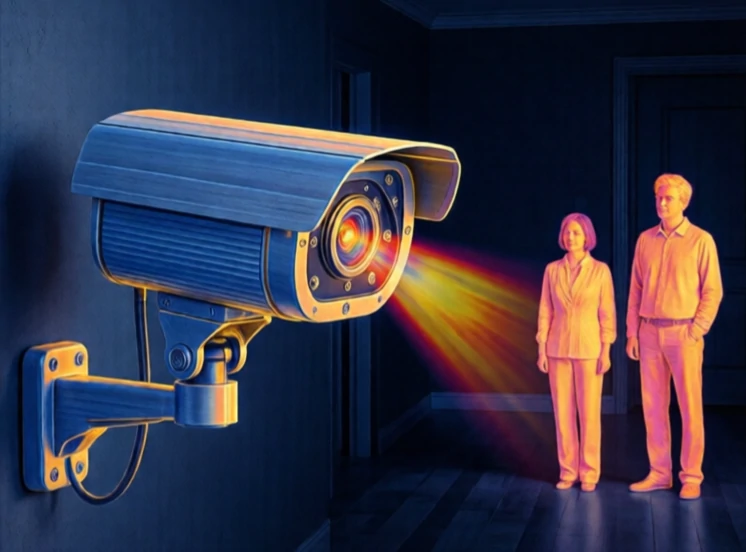
An infrared sensor detects infrared radiation. That radiation is heat, or light just below the visible spectrum. Passive sensors measure temperature without emitting anything. Active sensors emit infrared light and measure the reflection, which tells them whether an object is nearby.
Active infrared sensors are cheap and common in robotics. A pair of infrared LEDs and photodiodes sits behind a small window. The LED pulses. If an object is close, some light bounces back to the photodiode. The sensor outputs a voltage that indicates proximity. It works in darkness and does not care about color, though black surfaces absorb infrared and reduce range.
Infrared sensor uses
- Obstacle detection on mobile robots.
- Line following on warehouse AGVs.
- Motion detection in security systems.
- Non-contact temperature measurement.
- Remote controls and proximity switches.
The limitations matter. Sunlight contains infrared and can blind the sensor. Range is short, usually a few inches to a few feet. Soft or dark materials reflect poorly. That is why infrared sensors are often paired with ultrasonic or lidar for reliable navigation. For simple tasks like detecting a wall or following a line on the floor, an infrared sensor is hard to beat on cost. A few cents buys a reliable proximity reading, and that is often all a robot needs.
Comments
No comments yet. Be the first to share a thought.
Leave a comment