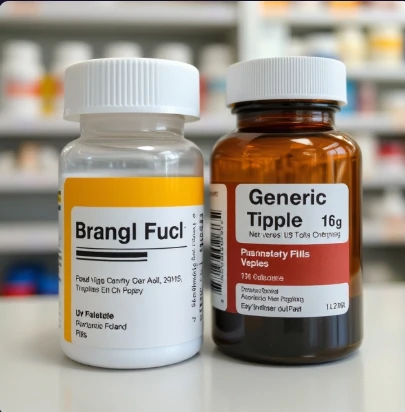
When a patent expires, the recipe is no longer exclusive. Other companies can make the same drug and sell it under its chemical name. That is a generic drug, and it is usually far cheaper than the brand. Atorvastatin, the generic of Lipitor, costs a fraction of what the brand did at its peak. Generics account for roughly 90 percent of prescriptions filled in the United States but only about 20 percent of drug spending.
A generic is not a copy of the brand in the way a photocopy is. It contains the same active ingredient, at the same strength, in the same dosage form, and it must be bioequivalent, meaning it delivers the drug to the bloodstream at a similar rate and extent. It can differ in color, shape, and excipients. The FDA requires bioequivalence studies before approval, and the standard is strict. Most generics are made by companies that specialize in high-volume manufacturing, and competition drives prices down further.
What to know:
- Same active ingredient. Same strength and dosage form.
- Bioequivalent. Delivers drug to the bloodstream at a similar rate and extent.
- Different look. Color, shape, and excipients may vary.
- Lower cost. Often 80 to 90 percent less than the brand.
Not every drug has a generic. Biologics are too complex to copy exactly, which is why biosimilars exist as a separate category.
Comments (2)
Leave a comment