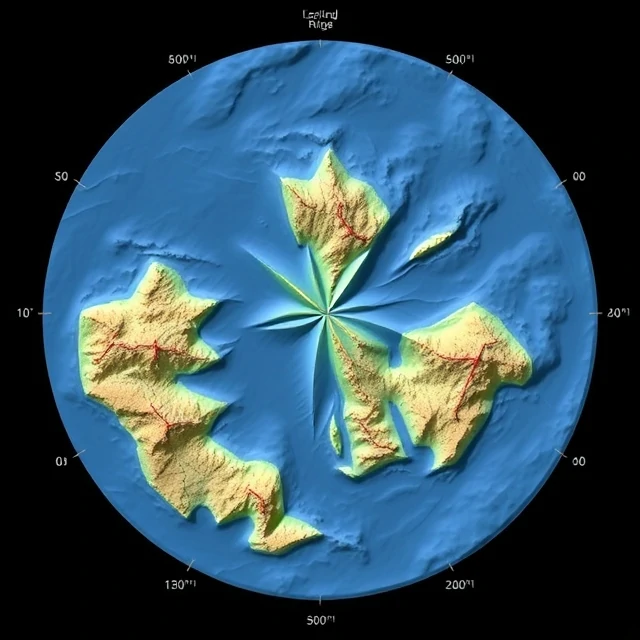
A continuous mountain range runs through the global ocean, wrapping around the planet for more than 60,000 kilometers. This mid-ocean ridge is the boundary where tectonic plates spread apart and new oceanic crust is formed by upwelling magma.
The ridge axis is marked by frequent earthquakes, volcanic eruptions, and hydrothermal vents. The crest may be a broad rise or a deep rift valley, depending on spreading rate. As newly formed crust moves away from the axis it cools, subsides, and accumulates sediment. Magnetic stripes recorded in the crust provided key evidence for seafloor spreading and plate tectonics.
Mid-ocean ridges are the largest single geological feature on Earth and the primary source of the ocean’s basaltic crust. They influence ocean chemistry through hydrothermal exchange and provide habitat for unique chemosynthetic communities. Detailed mapping and sampling of the ridge system remain ongoing because of its length and remoteness.
Every year the ridge system produces several cubic kilometers of new oceanic crust.
Comments
No comments yet. Be the first to share a thought.
Leave a comment