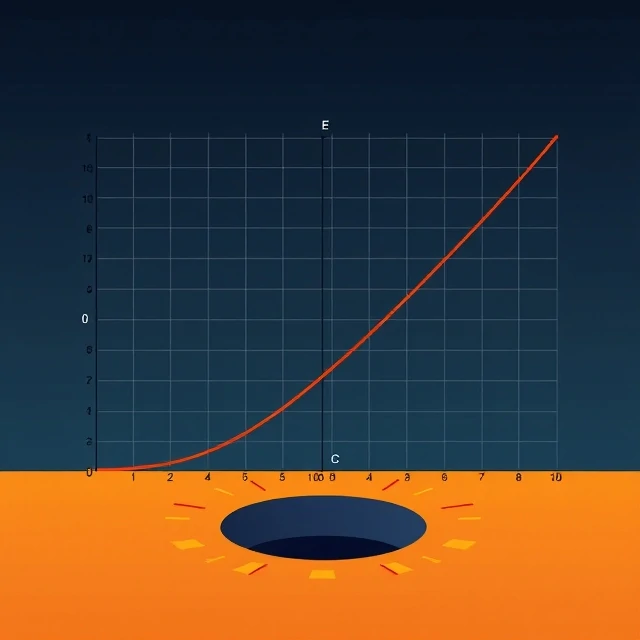
A limit describes what a function does near a point, not necessarily at that point. As x gets closer to 2, the function f(x) = (x² − 4)/(x − 2) gets closer to 4, even though the function is undefined at x = 2. The limit is 4.
Limits are the foundation of calculus. Derivatives are defined as limits of difference quotients. Integrals are limits of sums. Continuity is defined by limits: a function is continuous at a point if the limit equals the function's value there.
Limits can be one-sided, infinite, or at infinity. The formal epsilon-delta definition, developed by Cauchy and Weierstrass, made calculus rigorous. Without limits, calculus would rest on vague notions of "approaching." The concept is subtle but essential.
- Value a function approaches
- Foundation of derivatives and integrals
- Defines continuity
- Formalized by epsilon-delta definition
Comments (3)
Leave a comment