Some equations have no real solution. x² + 1 = 0 is one. To solve it, mathematicians introduced i, the imaginary unit, defined by i² = −1. A complex number combines a real part and an imaginary part: a + bi.
For centuries complex numbers were treated with suspicion. Cardano encountered them while solving cubics in the sixteenth century. Euler and Gauss later put them on firm footing. Gauss showed that every polynomial equation has a complex root, a result known as the fundamental theorem of algebra.
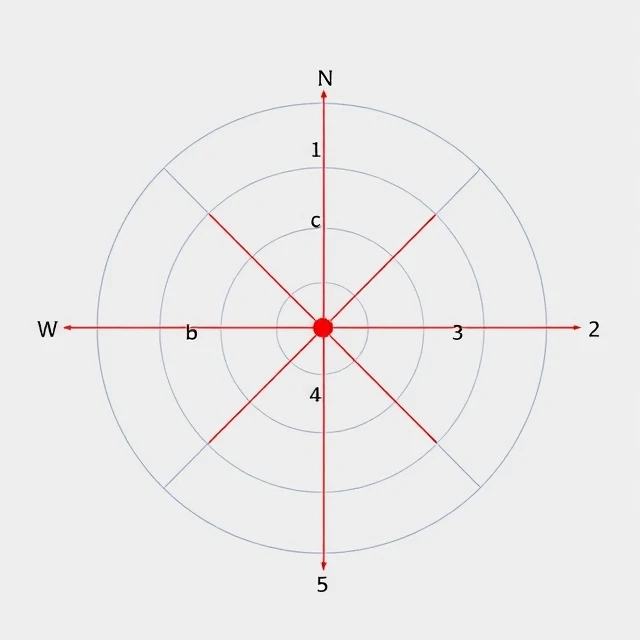
Complex numbers have a geometric interpretation as points in a plane, with the real part on the horizontal axis and the imaginary part on the vertical. They are essential in electrical engineering, quantum mechanics, signal processing, and fluid dynamics. The square root of −1, once a curiosity, now powers much of modern technology.
- Form a + bi, with i² = −1
- Combine real and imaginary parts
- Plotted on the complex plane
- Essential in engineering, physics, and signal processing
Comments
No comments yet. Be the first to share a thought.
Leave a comment