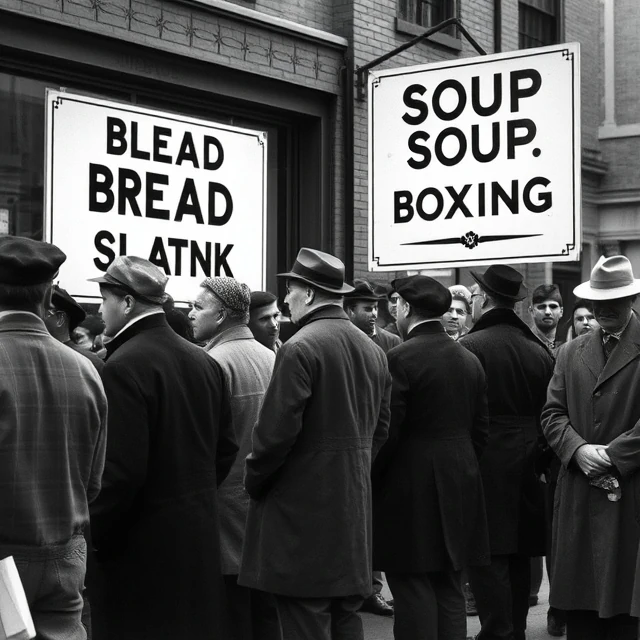
A depression is a severe and prolonged downturn in economic activity. It is worse than a recession. Recessions are common and usually last months. Depressions last years and cause widespread suffering. The Great Depression of the 1930s is the classic example. Unemployment hit 25 percent in the US. Banks failed. Farms were foreclosed.
What makes a depression different? Depth, duration, and spread. Output falls sharply. Deflation often sets in. Credit markets freeze. International trade collapses. Governments may be slow to respond, and their mistakes can make things worse. The Smoot-Hawley tariff, for instance, raised trade barriers and deepened the global slump.
Depressions are rare. The 2008 financial crisis was called the Great Recession, not a depression, partly because policy responses prevented a full collapse. But the risk remains. Economists study depressions to understand how to avoid them and how to escape if one begins.
Features of a depression
- Sharp fall in GDP
- Very high unemployment
- Deflation or falling prices
- Bank failures and credit freeze
- Long duration, often years
Comments
No comments yet. Be the first to share a thought.
Leave a comment