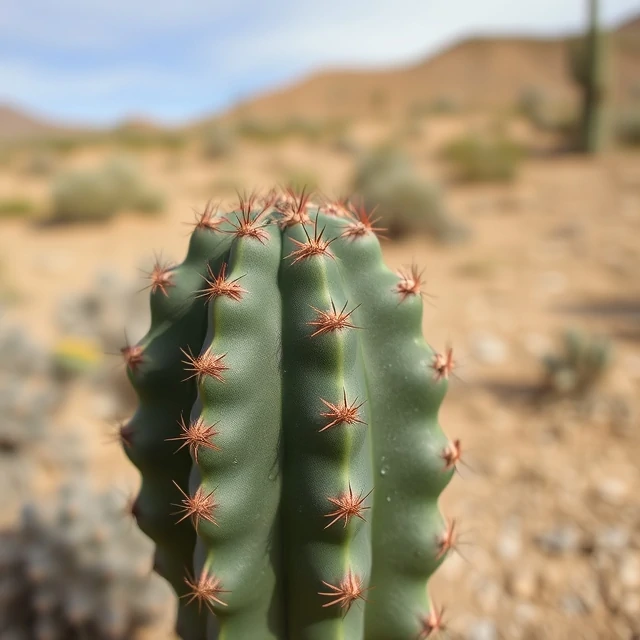
Polar bears have thick fur and a layer of fat. Cacti store water in fleshy stems. These are adaptations: traits or behaviors that help an organism survive in its environment. The term covers physical features, physiological processes, and behaviors. An adaptation develops over generations through natural selection. Individuals with useful traits survive and reproduce more, passing those traits on. Charles Darwin and Alfred Russel Wallace described the mechanism in the mid-19th century.
Adaptations take many forms. Structural adaptations are physical, like the long neck of a giraffe or the webbed feet of a duck. Behavioral adaptations are actions, like migration, hibernation, or nocturnal hunting. Physiological adaptations are internal, like the ability of a camel to conserve water or a deep-sea fish to withstand pressure. Some traits are exaptations, meaning they evolved for one purpose and were later co-opted for another. Feathers likely evolved for warmth before they were used for flight.
Types of adaptation
- Structural: body shape, limbs, teeth, fur.
- Behavioral: migration, courtship, tool use.
- Physiological: temperature regulation, water retention.
- Exaptation: a trait repurposed for a new function.
Adaptation is not goal-directed. Organisms do not choose to adapt. Environments filter variation, and what works persists.
Comments
No comments yet. Be the first to share a thought.
Leave a comment