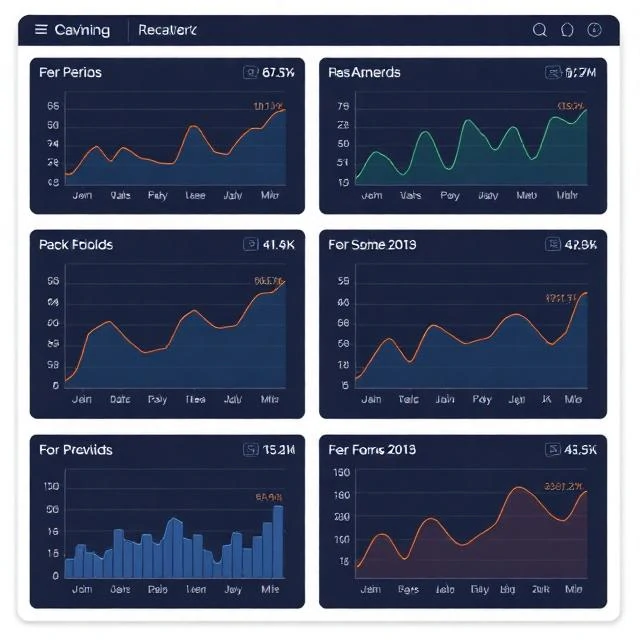
A metric is a quantifiable measure. Revenue, users, clicks, errors per minute, average response time. Metrics track performance and progress. They turn observations into numbers that can be compared over time. A metric is not the same as a KPI. All KPIs are metrics, but not all metrics are KPIs. A metric becomes a KPI when it is tied to a specific goal and someone acts on it. Website page views are a metric. If the goal is to increase engagement and the team tracks page views per session against a target, it becomes a KPI.
Metrics come in different shapes. Counts measure how many: orders, users, errors. Rates measure how often: conversion rate, error rate, churn rate. Ratios compare two quantities: revenue per user, cost per acquisition. Averages summarize a set of values, though they can hide important variation. Averages are useful for a quick read and dangerous for a final decision. Averages hide outliers, and outliers often matter more than the middle. Metrics also need context. A number without a comparison is meaningless. Revenue of $1 million is good or bad depending on the target, the previous period, and the industry. Metrics should always come with a reference point: last month, last year, the goal.
Metric types
- Counts — how many
- Rates — how often
- Ratios — one quantity divided by another
- Averages — central tendency, hides variation
- Percentiles — distribution, reveals outliers
A metric is a number with a job. Without context, it is just a number.
Comments
No comments yet. Be the first to share a thought.
Leave a comment