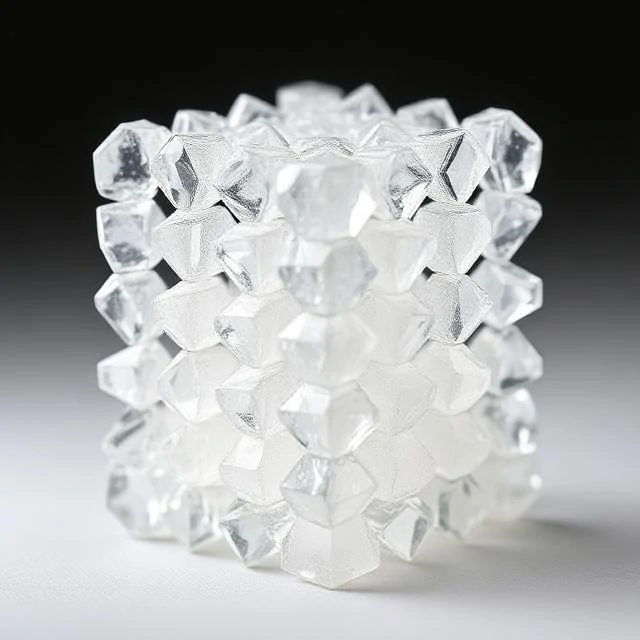
Table salt is sodium chloride, but it is not the only salt. In chemistry, a salt is an ionic compound formed from the reaction of an acid and a base. The reaction is neutralization. The acid donates a proton, the base accepts it, and the products are a salt and water. The salt consists of a cation from the base and an anion from the acid. The properties depend on the ions involved.
Salts are everywhere. Sodium chloride is essential for life and used in food and industry. Calcium carbonate is limestone, marble, and chalk. Potassium nitrate is saltpeter, used in fertilizers and gunpowder. Ammonium sulfate is a fertilizer. Sodium bicarbonate is baking soda. Magnesium sulfate is Epsom salt. Each has its own uses.
Salts are crystalline solids with high melting points. They dissolve in water, where they dissociate into ions. The solution conducts electricity because the ions are free to move. Salts can be acidic, basic, or neutral depending on the acid and base they come from. Sodium chloride is neutral. Sodium acetate is basic. Ammonium chloride is acidic.
Salts are used in food preservation, water treatment, medicine, and manufacturing. They are also a source of concern. Excess salt in the diet raises blood pressure. Salt pollution from road deicing harms freshwater ecosystems. The salt is simple. The consequences are complex.
Comments
No comments yet. Be the first to share a thought.
Leave a comment