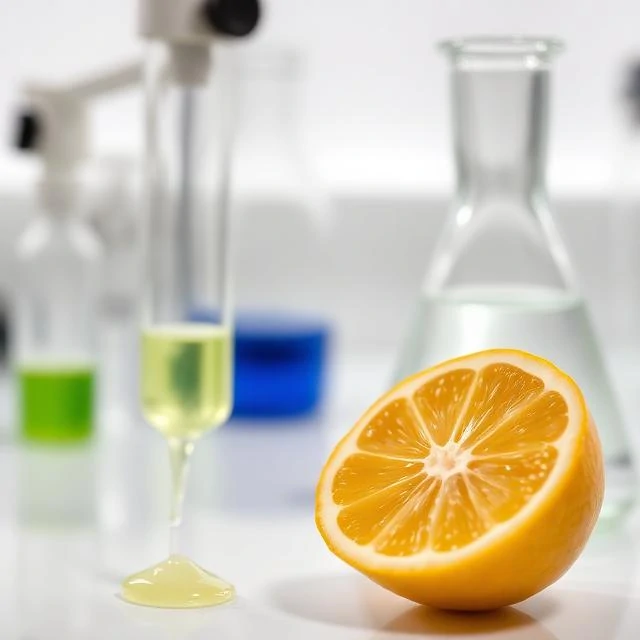
Acids taste sour. Lemon juice, vinegar, and stomach acid all share that sharpness. The word comes from the Latin acidus, meaning sour. But taste is a poor way to define a chemical class. Chemists define an acid by what it does: it donates a proton (a hydrogen ion) to another substance, or it accepts a pair of electrons to form a bond. The first definition comes from Brønsted and Lowry, the second from Lewis.
In water, an acid releases hydrogen ions, which combine with water molecules to form hydronium ions. The more hydronium ions in solution, the lower the pH and the stronger the acid. Hydrochloric acid dissociates completely in water, making it a strong acid. Acetic acid, the active ingredient in vinegar, dissociates only partially, making it a weak acid. Strength and concentration are different things. A weak acid can be concentrated; a strong acid can be dilute.
Acids react with bases to form salts and water. They react with metals to produce hydrogen gas. They corrode materials, which is why industrial acids are stored in glass or specialized plastics. They also catalyze reactions, dissolve minerals, and digest food. The human stomach maintains a pH of 1.5 to 3.5, strong enough to dissolve metal, yet the stomach lining protects itself with a mucus layer.
Comments
No comments yet. Be the first to share a thought.
Leave a comment