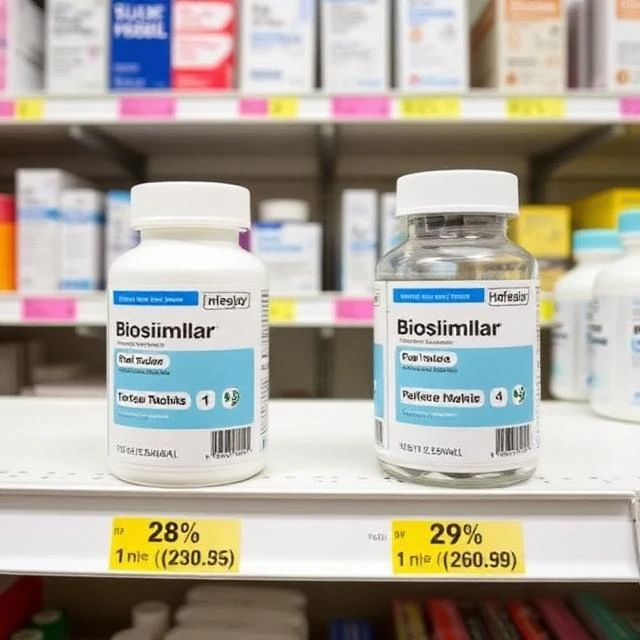
When a small-molecule drug goes off patent, generics flood the market. The copy is chemically identical to the original, and the price drops. Biologics do not work that way. They are made by living cells, and living cells introduce variation. You cannot make an exact copy of a monoclonal antibody. The best you can do is a biosimilar: a product highly similar to an approved reference product, with no clinically meaningful differences in safety, purity, or potency.
Biosimilars must pass rigorous comparability studies. The manufacturer must show that the biosimilar has the same amino acid sequence, the same structure, the same biological activity, and the same clinical profile as the reference product. That requires analytical testing, animal studies, and often a clinical trial. The process costs $100 million to $250 million, far more than a generic but far less than developing a new biologic.
Biosimilars have been available in Europe since 2006 and in the United States since 2015. They have reduced prices for drugs like Remicade, Herceptin, and Neulasta. But adoption has been slow. Doctors and patients are cautious. Manufacturers of the original biologics use tactics to protect their market share. Interchangeability, which allows a pharmacist to substitute a biosimilar without the prescriber's involvement, is a separate and stricter designation.
Biosimilars are not identical. They are close enough. That is the point.
Comments
No comments yet. Be the first to share a thought.
Leave a comment