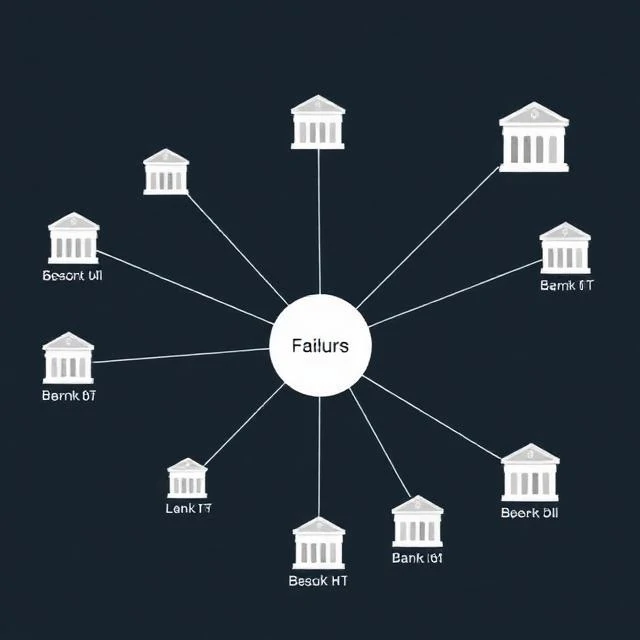
Systemic risk is the risk that the failure of one institution or market destabilizes the entire financial system. It is the difference between a bank failing and the banking system failing. A small bank failure is painful for its customers. A large bank failure can freeze credit, trigger runs at other banks, and cause a recession. The 2008 crisis was a systemic event. Lehman Brothers failed, and the shockwave nearly brought down the global financial system.
Systemic risk comes from several sources. Size matters. A bank that is too big to fail poses systemic risk because its failure would cascade through the system. Interconnectedness matters. If banks lend to each other and trade with each other, a failure in one can transmit losses to others. Common exposures matter. If many banks hold the same assets, a price decline can hit them all at once. Opacity matters. If no one knows who holds the losses, confidence collapses.
Regulators try to contain systemic risk. They designate systemically important financial institutions and subject them to stricter capital, liquidity, and resolution requirements. They run stress tests to ensure banks can survive severe shocks. They require living wills that describe how a bank would be wound down without a bailout. They monitor shadow banking, where risk can migrate outside the regulated perimeter.
Systemic risk cannot be eliminated. It can be reduced. The question is whether the rules are strong enough and whether regulators act fast enough when trouble starts.
Comments
No comments yet. Be the first to share a thought.
Leave a comment