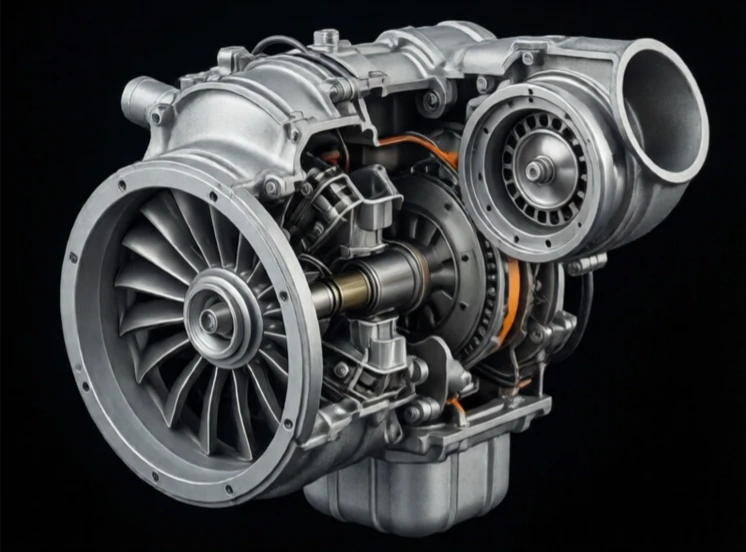
A turbocharger uses exhaust gas to spin a turbine. The turbine drives a compressor that forces more air into the engine. More air means more fuel can burn, and more fuel means more power. The clever part is that the energy comes from exhaust that would otherwise be wasted.
Turbocharging dates back to the early 1900s. Alfred Büchi patented the idea in 1905. It saw use on aircraft engines in World War I and on diesel trucks in the 1930s. The 1973 oil crisis pushed turbochargers into mainstream cars as a way to get V8 power from a smaller engine. Early turbos suffered from lag. Modern units use twin-scroll housings, variable geometry, and electric assist to spool faster.
Why turbos are everywhere now
- Smaller engines with turbos meet fuel economy targets.
- Power matches larger naturally aspirated engines.
- Turbocharging works well with hybrid systems.
- Direct injection and intercooling improve efficiency.
A turbocharger spins at up to 150,000 RPM and glows red hot under load. Oil changes matter more on turbo engines because the turbo shares engine oil for lubrication and cooling. Shutting down a hot turbo engine immediately can cook the oil in the bearing housing. A short cool-down or a turbo timer helps. Treat a turbo engine well and it can last as long as any other.
Comments
No comments yet. Be the first to share a thought.
Leave a comment