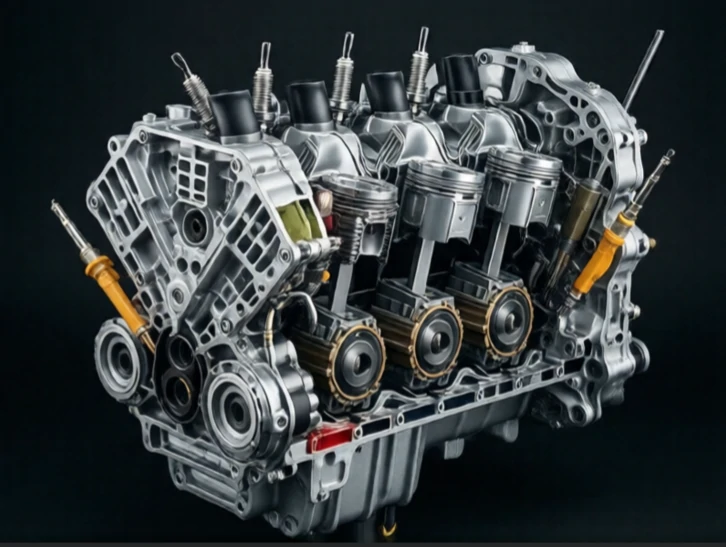
A petrol engine burns gasoline using a spark to start combustion. Air and fuel mix in the intake, the piston compresses the mixture, and the spark plug fires. The expanding gas drives the piston down. That is the whole story, repeated thousands of times per minute.
Nikolaus Otto built the first practical four-stroke petrol engine in 1876. Karl Benz put one in a three-wheeled car in 1885. The basic layout has not changed much since. What has changed is everything around it: fuel injection replaced carburetors, computers replaced mechanical distributors, and turbochargers let small engines produce big power.
Petrol versus diesel
- Petrol engines use a spark; diesels use compression heat.
- Petrol engines run higher RPM and produce less torque at low speed.
- Diesels are more fuel-efficient but heavier and noisier.
- Petrol is cheaper in the US; diesel is often cheaper in Europe.
Direct injection, variable valve timing, and cylinder deactivation have pushed petrol engine efficiency higher. Hybrid systems pair a petrol engine with an electric motor to cover its weak spots. The petrol engine is not going away soon, but it is sharing the load more than ever.
Comments (2)
Leave a comment