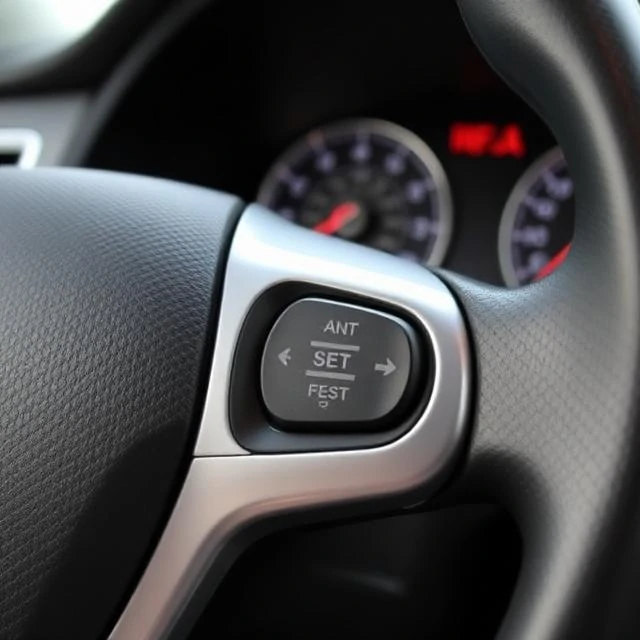
Cruise control maintains a set speed without the driver holding the accelerator. It is useful on long highway drives, where holding a steady speed reduces fatigue and can improve fuel economy. The driver sets the speed, and the system holds it until the brake is pressed or the system is turned off.
The technology is older than most people think. Ralph Teetor, a blind engineer, invented a speed control system in 1948. He was frustrated by his lawyer's habit of speeding up and slowing down while talking. The first cars offered it in the late 1950s. It became common in the 1970s, when fuel economy became a priority.
Modern systems are more capable. Adaptive cruise control uses radar or cameras to maintain a set distance from the car ahead, slowing down and speeding up as needed. Traffic jam assist can handle stop-and-go traffic. Some systems combine cruise control with lane centering to provide partial automation. These are Level 2 systems, and the driver must stay attentive.
Cruise control has limits. It does not work well in heavy traffic, on winding roads, or in bad weather. It can be dangerous on wet or icy surfaces, because it may cause the wheels to spin. Most manufacturers recommend turning it off in those conditions.
Comments
No comments yet. Be the first to share a thought.
Leave a comment