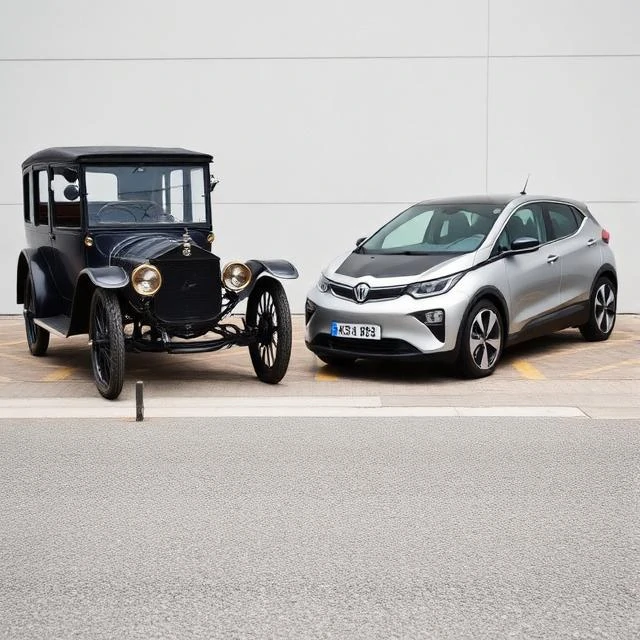
An automobile is a self-propelled passenger vehicle with its own engine and four wheels. Karl Benz built the first practical one in 1886, a three-wheeler with a single-cylinder gasoline engine. Four wheels soon became standard. Within a few decades, the automobile reshaped cities, economies, and daily life.
The basic layout has not changed much. An engine or motor provides power. A transmission sends it to the wheels. A steering system controls direction. Brakes slow and stop the car. A body encloses passengers and cargo. What has changed is everything else: safety, efficiency, comfort, and electronics. A modern car has more computing power than the Apollo guidance computer.
Automobiles come in many forms. Sedans, hatchbacks, SUVs, pickup trucks, vans, and sports cars each serve different needs. Some are cheap and basic. Others are luxury machines with leather, wood, and advanced technology. The average new car in the United States costs over $48,000, a figure that has climbed faster than inflation.
The automobile's future is electric, connected, and increasingly automated. But the fundamental idea, a personal vehicle that takes you where you want to go on your own schedule, remains powerful. It changed the world once. It may do so again.
Comments
No comments yet. Be the first to share a thought.
Leave a comment