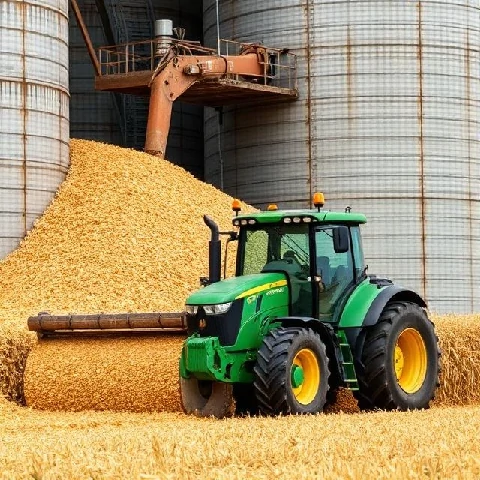
Silage is fermented, high-moisture forage stored for livestock feed. It is made from grass, maize, sorghum, alfalfa, or other crops, cut green and packed airtight so that lactic acid bacteria can ferment the sugars. The acid preserves the feed and keeps spoilage organisms out.
The technique spread in the late 19th century and became standard on dairy farms in the 20th. It has a key advantage over hay: it does not depend on good drying weather. A farmer can cut and ensile a crop in a wet week that would ruin hay. That reliability matters in northern Europe, the Pacific Northwest, and other humid regions.
Common silage types
- Grass silage: the standard in temperate dairy systems
- Maize silage: high energy, widely used for cattle
- Alfalfa silage: high protein, tricky to ensile
- Whole-crop cereal silage: barley, wheat, or oats cut green
Storage options include bunker silos, tower silos, and wrapped bales. The key is excluding oxygen. A poorly sealed silo will heat, mould, and lose feed value. Well-made silage smells slightly sweet and acidic, and cattle eat it eagerly.
Comments
No comments yet. Be the first to share a thought.
Leave a comment