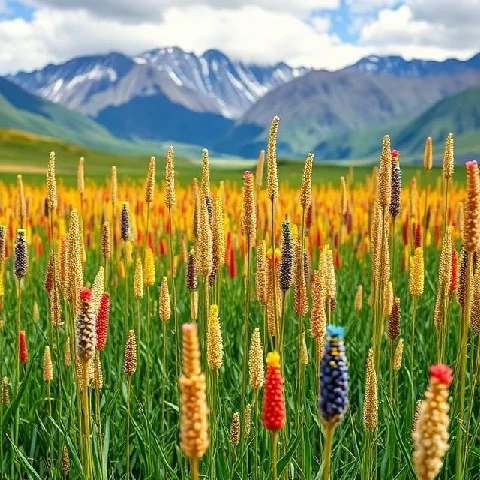
Quinoa is a seed crop native to the Andes, grown for thousands of years in Bolivia, Peru, and Chile. It is not a true cereal but a pseudocereal, related to beets and spinach. The seeds are small, flat, and coated in saponins, a bitter compound that must be washed off before eating.
The plant tolerates cold, drought, and high altitude, growing where few other crops will. It was a staple of the Inca diet and was considered sacred. After the Spanish conquest, it was pushed aside in favour of wheat and barley. Global interest returned in the 1970s and exploded in the 2000s as consumers in North America and Europe discovered its nutritional profile.
Why it caught on
- Complete protein with all essential amino acids
- Gluten-free and high in fibre
- Rich in iron, magnesium, and manganese
- Grows in marginal, high-altitude conditions
The boom lifted incomes for Andean farmers but also raised prices locally, pricing some traditional consumers out of a food they had eaten for generations. Bolivia and Peru still dominate world production, though quinoa is now grown in the US, Canada, and Europe.
Comments
No comments yet. Be the first to share a thought.
Leave a comment