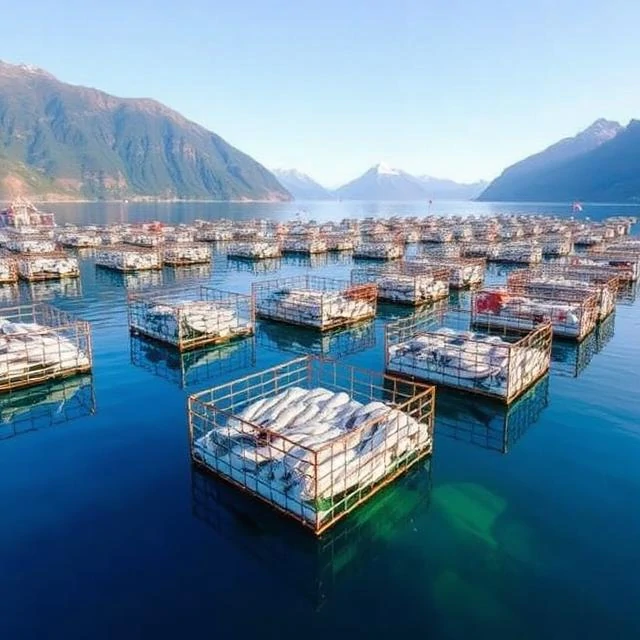
Pisciculture is fish farming, the controlled breeding and rearing of fish for food. It is a branch of aquaculture, but the word is usually reserved for finfish rather than shellfish or seaweed.
The practice is old. Chinese farmers were raising carp in ponds more than 2,500 years ago, and Roman writers described similar systems. Modern pisciculture ranges from small ponds in Bangladesh to sea cages off Norway and Chile, where Atlantic salmon are grown by the million. Tilapia, carp, catfish, and trout dominate freshwater production. Salmon, sea bass, and sea bream dominate marine.
Systems in use
- Ponds: simple, low-density, common in Asia
- Raceways: flowing water channels for trout
- Cages and net pens: floating enclosures in lakes or sea
- Recirculating systems: tanks with filters that reuse water
Feed is the biggest cost and the biggest environmental question. Carnivorous species like salmon need protein, traditionally from wild-caught fish. Plant-based and insect-based feeds are reducing that dependence, though the transition is incomplete.
Comments
No comments yet. Be the first to share a thought.
Leave a comment