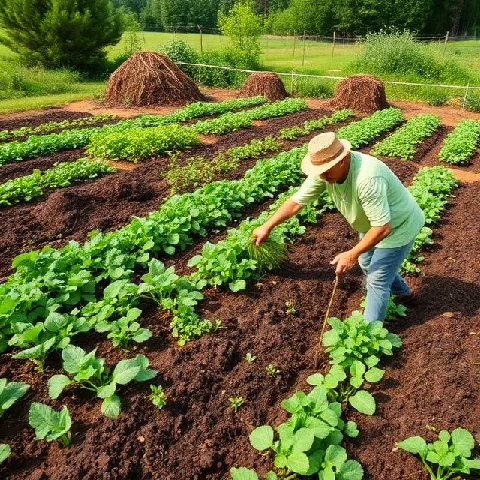
Organic farming is a production system that avoids synthetic fertilisers, synthetic pesticides, and genetically modified organisms. Instead, it relies on crop rotation, compost, manure, cover crops, biological pest control, and mechanical cultivation.
The modern organic movement grew out of the 1920s and 1930s, when critics of industrial agriculture began promoting soil health and natural cycles. Certification schemes appeared in the 1970s and 1980s, and governments wrote legal standards in the 1990s. The USDA Organic label, EU organic logo, and similar marks now define what can be sold as organic in major markets.
Core practices
- Crop rotation and diversification
- Compost, manure, and green manures for fertility
- Biological and cultural pest control
- No synthetic pesticides, herbicides, or GMOs
Organic yields are often lower than conventional ones, especially for cereals, though the gap narrows in drought years because organic soils hold water better. Prices are usually higher, which is what makes the system economically viable for many growers. Consumer demand has grown steadily for three decades.
Comments
No comments yet. Be the first to share a thought.
Leave a comment