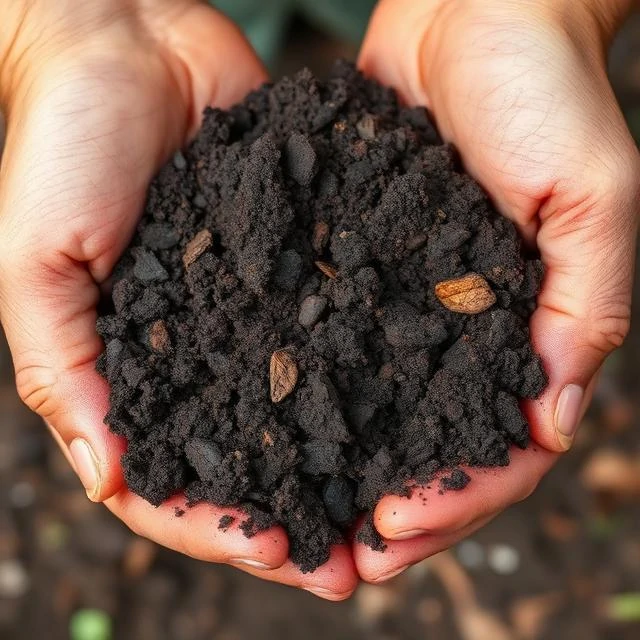
Humus is the dark, spongy material left when leaves, roots, and manure have been broken down as far as they will go. It is what gives good soil its colour and its smell after rain.
Chemically, humus is a mix of complex organic compounds that resist further decay. It holds water like a sponge, binds soil particles into crumbs, and carries a negative charge that grabs onto positive nutrient ions like calcium, potassium, and magnesium, keeping them available for roots rather than letting them wash away.
What humus does for soil
- Improves structure and aeration
- Increases water-holding capacity
- Buffers pH swings
- Feeds the microbes that cycle nutrients
Building humus is slow. It forms over years and can be lost in a single season of aggressive tillage or erosion. That is why organic and regenerative growers treat it as the foundation of everything else, and why cover crops, compost, and reduced tillage are central to their methods.
Comments
No comments yet. Be the first to share a thought.
Leave a comment