The farming of aquatic organisms such as fish, shellfish, and plants.
🐟
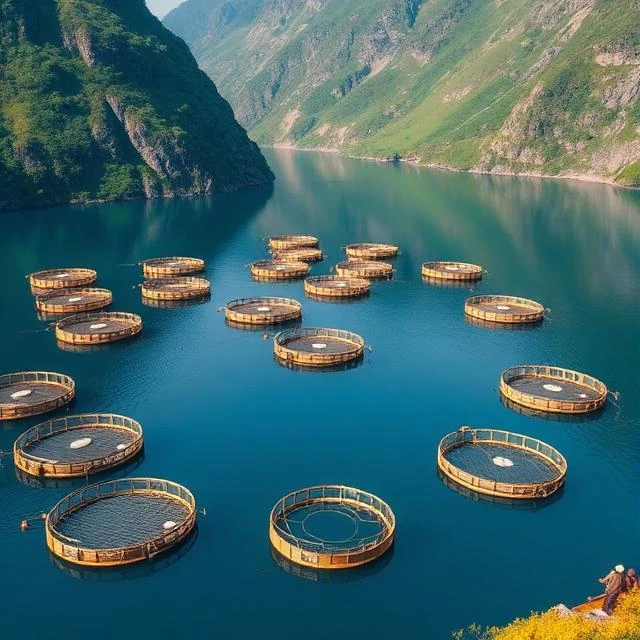
Aquaculture is the farming of aquatic organisms, including fish, crustaceans, molluscs, and aquatic plants, under controlled conditions. It encompasses freshwater, brackish, and marine environments, and ranges from extensive pond culture to intensive recirculating systems. The practice has ancient roots: Chinese carp farming dates to at least 2,500 years ago, and Roman authors described oyster cultivation. Modern aquaculture expanded rapidly after the 1970s, and by the 2020s it surpassed capture fisheries as the primary source of aquatic animal food. Major species include Atlantic salmon, Nile tilapia, channel catfish, Pacific white shrimp, and blue mussels, along with seaweed such as kelp and nori. Systems include ponds, raceways, cages, net pens, and land-based tanks with biofiltration. Benefits include protein production with lower feed-conversion ratios than many terrestrial meats; concerns include nutrient pollution, disease transmission to wild stocks, habitat conversion, and reliance on wild-caught fishmeal. Certification schemes such as the Aquaculture Stewardship Council aim to promote best practices.
Comments
No comments yet. Be the first to share a thought.
Leave a comment