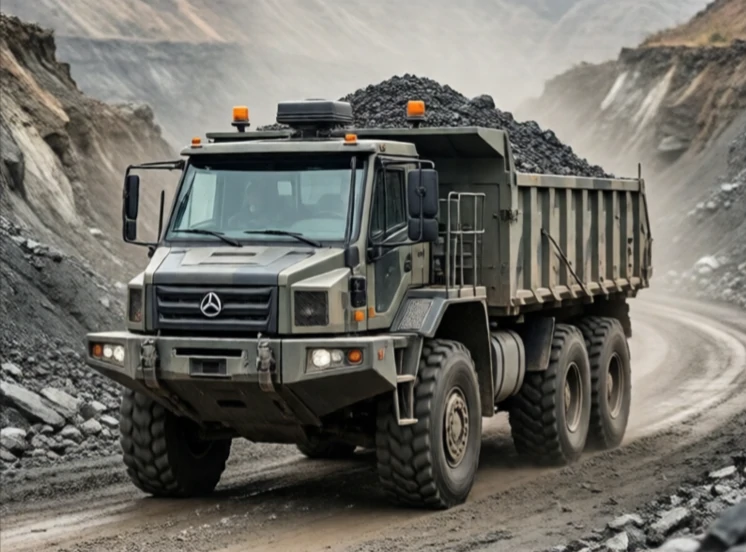
An unmanned ground vehicle, or UGV, operates on land without a human driver. It might be teleoperated, semi-autonomous, or fully autonomous. UGVs range from small bomb disposal robots to large autonomous haul trucks in mines. The common thread is that no one is sitting in the driver's seat.
The military drove early UGV development. Bomb disposal robots like the PackBot and Talon entered service in the 2000s. They let soldiers disarm explosives from a safe distance. Mining companies later adopted autonomous haul trucks. A truck that drives itself on a fixed route in a mine is easier to automate than a car on a city street. The environment is controlled. The routes are repetitive. The safety case is manageable.
UGV applications
- Bomb disposal and hazardous materials handling.
- Mining and construction hauling.
- Warehouse logistics and material transport.
- Agriculture: autonomous tractors and harvesters.
- Security patrol and perimeter monitoring.
Autonomous UGVs face the same perception and planning challenges as self-driving cars, but often in simpler environments. A warehouse robot navigates aisles and avoids people. A mine truck follows a haul road. A bomb disposal robot is teleoperated by a human. The level of autonomy matches the complexity of the task and the consequences of failure. A mistake in a warehouse is a dropped box. A mistake in a mine is a collapsed wall. UGVs are already common in controlled environments. They are moving into public spaces slowly, as the technology and the regulations mature.
Comments
No comments yet. Be the first to share a thought.
Leave a comment