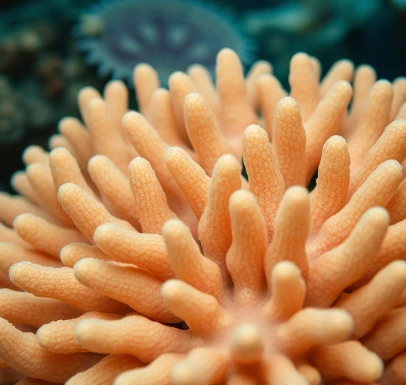
Corals are colonial marine invertebrates related to sea anemones and jellyfish. Most reef-building species secrete calcium-carbonate skeletons that accumulate over time into massive structures. Tiny photosynthetic algae called zooxanthellae live inside the coral tissue and supply much of the host’s energy needs in exchange for nutrients and protection.
This partnership allows corals to thrive in clear, nutrient-poor tropical waters. When stressed by heat, pollution, or other factors, corals may expel their algae and bleach. Prolonged bleaching often leads to death. Corals also capture plankton with their tentacles, providing a secondary food source.
Individual coral colonies can live for centuries, and the reefs they build support extraordinary biodiversity. Beyond their ecological value, corals supply coastal protection, tourism revenue, and fisheries habitat. Their sensitivity to temperature and chemistry makes them important indicators of ocean change.
- Colonial invertebrates that build calcium-carbonate skeletons
- Host symbiotic algae for nutrition
- Foundation of tropical reef ecosystems
- Highly sensitive to warming and acidification
Comments
No comments yet. Be the first to share a thought.
Leave a comment