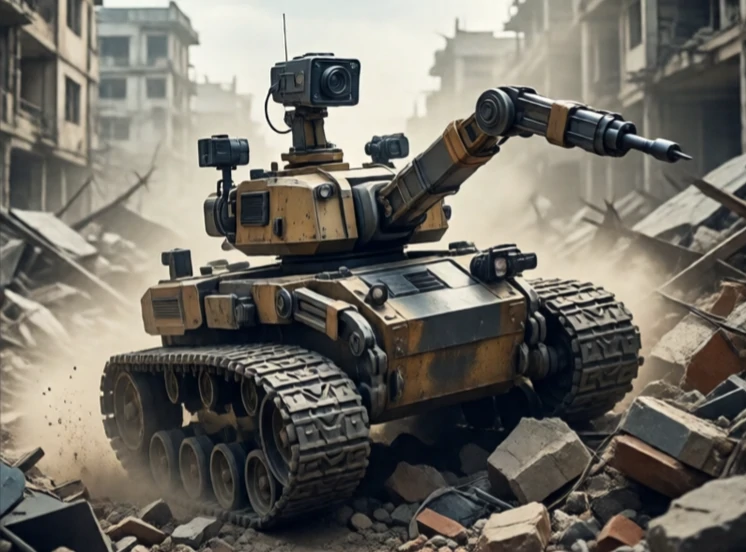
A mobile robot moves through its environment. It is not bolted to a floor. It navigates from place to place, carrying sensors, tools, or cargo. The mobility can be wheels, tracks, legs, or propellers. The environment can be a warehouse, a hospital, a farm, or a city street.
The mobile robot has to solve three problems: where am I, where am I going, and how do I get there. Localization, mapping, and path planning work together. Sensors perceive the world. Controllers command the motors. Safety systems prevent collisions. The robot might be teleoperated, semi-autonomous, or fully autonomous.
Mobile robot types
- Wheeled: fast, efficient, most common indoors.
- Tracked: better on rough terrain, slower.
- Legged: climbs stairs and obstacles, complex.
- Flying: bypasses ground obstacles, limited battery.
- Swimming: underwater exploration and inspection.
Wheeled robots dominate because wheels are simple and efficient. Differential drive uses two independently driven wheels. Omnidirectional wheels move in any direction. Ackermann steering mimics a car. The choice depends on the environment and the task. A warehouse robot needs to move fast on smooth floors. A search-and-rescue robot needs to climb rubble. A delivery robot needs to navigate sidewalks and curbs. Mobile robots are already among us: vacuum cleaners, delivery carts, hospital transports. They are the first wave of everyday robots, and they are getting better every year.
Comments
No comments yet. Be the first to share a thought.
Leave a comment