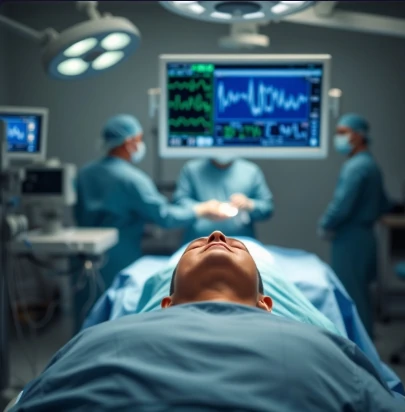
Before 1846, surgery was a matter of speed. A skilled surgeon could amputate a limb in under three minutes, because that was how long a patient could endure the pain. Then William Morton demonstrated ether at Massachusetts General Hospital, and the operating room changed permanently.
Anesthetics fall into two broad groups. General anesthetics produce reversible unconsciousness, allowing major surgery without movement or awareness. They work on multiple targets in the brain, including GABA-A receptors, and are usually paired with analgesics and muscle relaxants. Local anesthetics, by contrast, block sodium channels in nerve endings, numbing a specific region while the patient stays awake. Lidocaine is the classic example, used from dental work to minor stitches.
Modern practice has refined the craft:
- Induction. Propofol or an inhaled agent puts the patient under in seconds.
- Maintenance. Volatile gases or a continuous IV infusion keep them there.
- Monitoring. Pulse oximetry, capnography, and blood pressure tracking catch problems early.
- Reversal. Agents wear off or are reversed, and the patient wakes in a controlled way.
The risks are real but manageable. Anesthesia-related mortality in healthy patients is now roughly one in 100,000 to 200,000, a fraction of what it was a century ago.
Comments
No comments yet. Be the first to share a thought.
Leave a comment