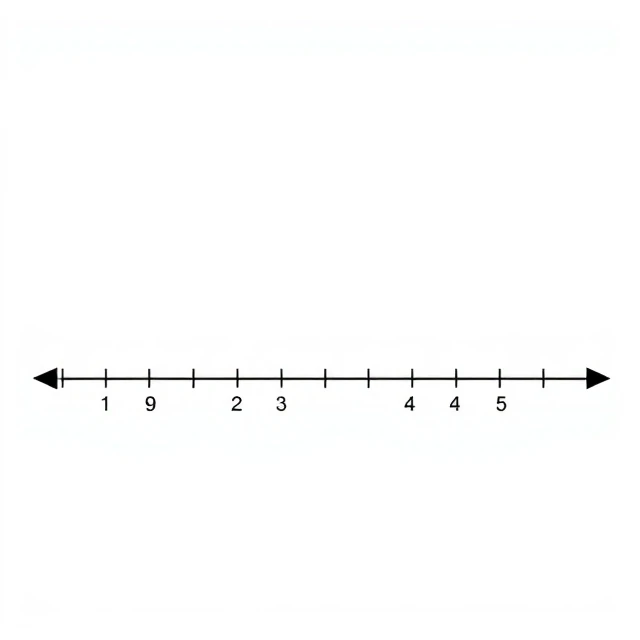
A geometric progression multiplies by the same number each step. Start at 2 and multiply by 3: 2, 6, 18, 54, 162. The constant multiplier is the common ratio. If the ratio is between −1 and 1, the terms shrink toward zero. If it is greater than 1, they grow quickly.
The general term is a × r^(n−1), where a is the first term, r is the common ratio, and n is the position. The sum of a finite geometric series is a(1 − r^n)/(1 − r). An infinite series converges if |r| < 1.
Geometric progressions model compound interest, population growth, radioactive decay, and fractal scaling. They appear in music, where frequencies of octaves double. Understanding them is essential for finance, biology, and computer science. The pattern is simple, but its applications are vast.
- Each term multiplied by a constant ratio
- General term: a × r^(n−1)
- Infinite series converges if |r| < 1
- Models compound interest, growth, and decay
Comments
No comments yet. Be the first to share a thought.
Leave a comment