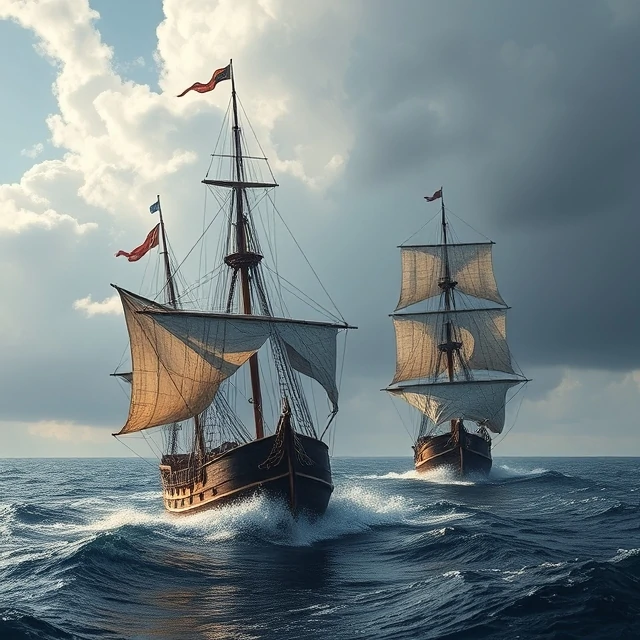
In earlier centuries, private ships made war under license. A privateer was a privately owned and armed vessel authorized by a government through a letter of marque to attack and capture enemy merchant ships in wartime.
Privateering allowed states to expand naval pressure without maintaining large standing fleets. Captured ships and cargoes were sold as prizes, with proceeds shared among owners, crew, and the issuing state. The practice invited abuse and shaded into piracy when commissions were vague or ignored.
The Declaration of Paris in 1856 largely abolished privateering among major powers. The term survives in historical discussion and occasionally in metaphor. Modern naval auxiliaries and armed merchant cruisers are distinct legal categories.
- Privately owned warship licensed to attack enemy trade
- Operated under a letter of marque in wartime
- Profited from captured prizes
- Largely abolished in the mid-nineteenth century
Comments
No comments yet. Be the first to share a thought.
Leave a comment