Permafrost is ground that stays frozen for at least two consecutive years. It covers about a quarter of the Northern Hemisphere's land area. In some places, it is only a meter thick. Elsewhere, it extends hundreds of meters deep. Permafrost underlies much of Siberia, Alaska, and northern Canada.
It stores enormous amounts of carbon. Dead plants and animals froze before they could fully decompose. The organic matter accumulated over thousands of years. Scientists estimate that permafrost holds nearly twice as much carbon as the atmosphere currently contains. As long as it stays frozen, the carbon stays locked away.
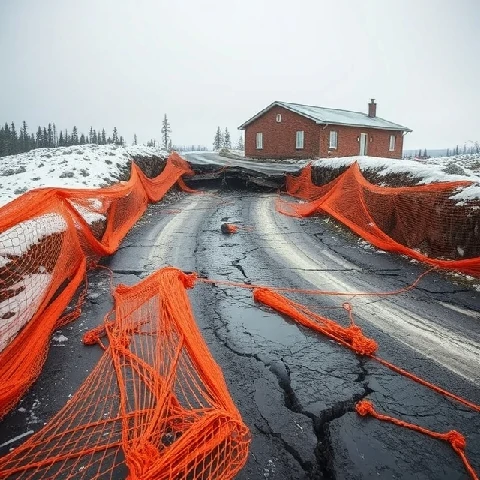
Thawing releases that carbon as carbon dioxide and methane. This creates a feedback loop. Warming thaws permafrost, which releases greenhouse gases, which causes more warming. The process is already underway. Thawing ground also damages roads, buildings, and pipelines built on frozen soil. Some Arctic communities are being forced to relocate. The changes are irreversible on human timescales.
Key features
- Frozen for at least two years
- Stores large amounts of carbon
- Thaws with warming
- Releases CO2 and methane
- Damages infrastructure
Comments
No comments yet. Be the first to share a thought.
Leave a comment