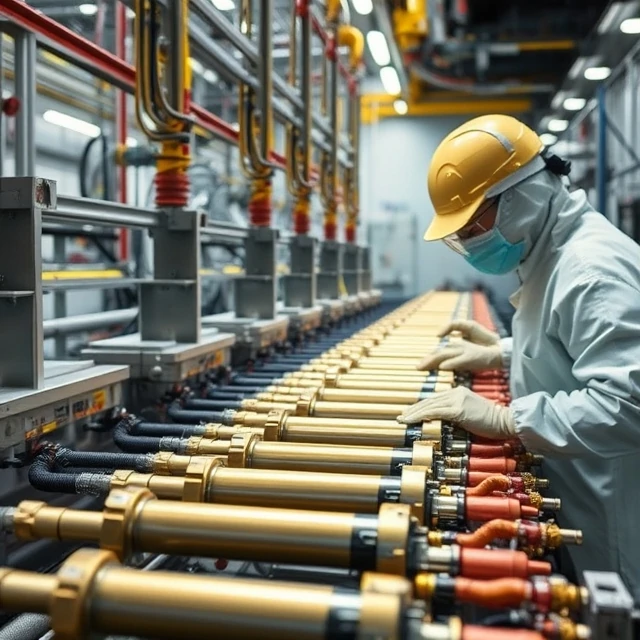
Nuclear energy comes from the nucleus of atoms. Split a heavy nucleus, and it releases a huge amount of heat. Fuse two light nuclei, and the same happens. The first process, fission, powers every commercial nuclear plant today. The second, fusion, powers the Sun and remains experimental on Earth.
Fission plants heat water into steam, which spins turbines. The fuel is usually uranium. A single uranium pellet the size of a pencil eraser holds as much energy as a ton of coal. Reactors produce no CO2 during operation. They run continuously for 18 to 24 months between refueling.
Nuclear has drawbacks. It produces radioactive waste that must be stored for thousands of years. Accidents, though rare, can be catastrophic. Plants are expensive to build and take a decade or more. Public opposition is strong in many countries. Still, nuclear provides steady, low-carbon power that complements variable renewables.
Key points
- Fission and fusion
- Uranium fuel
- Low operational emissions
- Radioactive waste
- High upfront cost
Comments
No comments yet. Be the first to share a thought.
Leave a comment