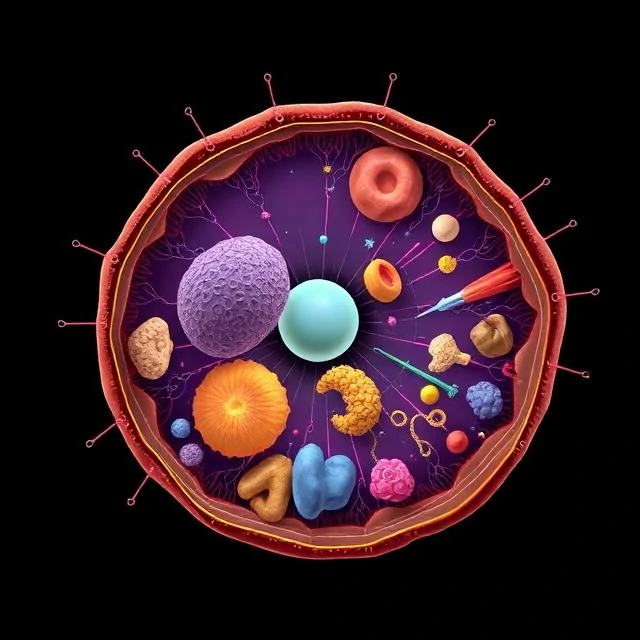
Every living thing is made of cells. Some organisms are single cells. Others, like humans, contain trillions. The cell is the basic structural and functional unit of life. It takes in nutrients, produces energy, responds to signals, grows, and divides. It is a factory, a power plant, and a communication hub, all enclosed in a membrane.
Cells come in two main types. Prokaryotic cells, like bacteria, have no nucleus. Their DNA floats freely in the cytoplasm. Eukaryotic cells, like those in plants, animals, and fungi, have a nucleus that houses their DNA, plus organelles that perform specialized functions. Mitochondria generate energy. Ribosomes build proteins. The endoplasmic reticulum and Golgi apparatus process and package proteins. Each organelle has a job.
Cells are not static. They move, change shape, and respond to their environment. They divide to make more cells, and they die when they are damaged or no longer needed. The balance between division and death keeps tissues healthy. When the balance breaks, cancer or degeneration can result.
Understanding cells is fundamental to biology and medicine. Every disease has a cellular basis. Every drug targets a cellular process. The cell is where life happens.
Comments
No comments yet. Be the first to share a thought.
Leave a comment