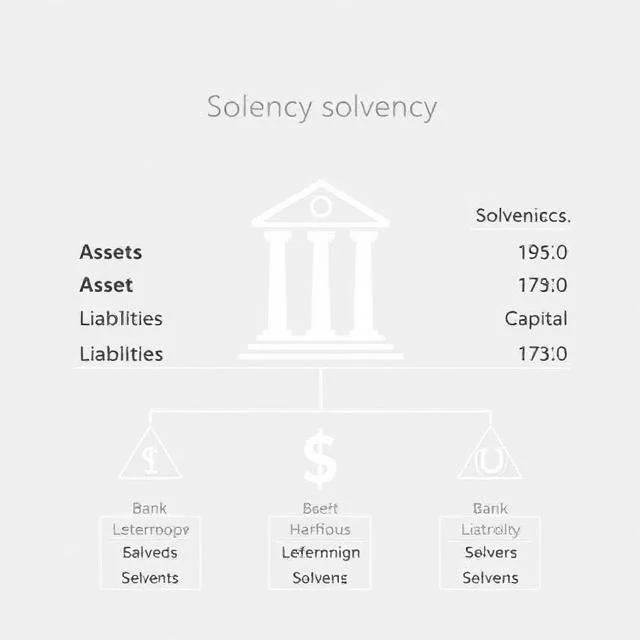
Solvency is a bank's ability to meet its long-term obligations. A solvent bank has more assets than liabilities. An insolvent bank owes more than it owns, and its capital is wiped out. Solvency is not the same as liquidity. A bank can be solvent but illiquid, meaning it has enough assets to cover its debts but cannot convert them to cash fast enough to pay what is due today. That is what happened to Silicon Valley Bank in 2023.
Regulators monitor solvency through capital ratios. The common equity tier 1 ratio compares a bank's core capital to its risk-weighted assets. A ratio above 7 percent is considered well-capitalized in the United States. Below 4.5 percent is undercapitalized. Below 2 percent is critically undercapitalized, and regulators can seize the bank. Stress tests project how a bank's capital would fare in a severe recession.
Solvency is a matter of confidence. If depositors believe a bank is insolvent, they withdraw their money, which can make it insolvent. If creditors believe a bank is insolvent, they refuse to lend, which can force it to sell assets at a loss. That is why regulators act quickly when solvency is in doubt. They can inject capital, arrange a merger, or take over the bank and protect depositors.
The 2008 crisis tested the solvency of the global banking system. Governments injected hundreds of billions of dollars into banks to keep them solvent. The alternative, widespread bank failures, would have been far worse.
Comments (2)
Leave a comment