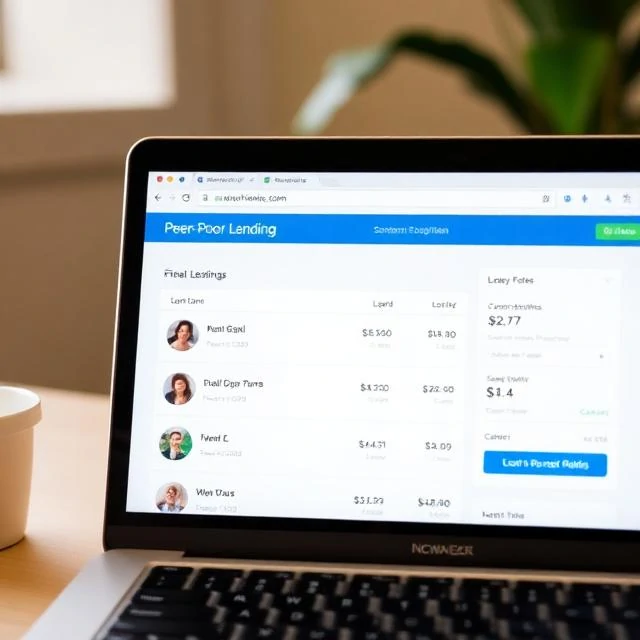
Banks take deposits and make loans. Peer-to-peer lending cuts out the bank. Borrowers and lenders connect directly through an online platform. The platform screens borrowers, sets interest rates, and handles payments. Lenders buy notes that correspond to portions of loans, spreading their money across many borrowers. LendingClub and Prosper pioneered the model in the United States. Zopa did the same in the United Kingdom.
P2P lending offers benefits to both sides. Borrowers get lower rates than credit cards, often 6 to 18 percent, and faster approval. Lenders get higher returns than savings accounts, often 4 to 8 percent, though with more risk. The platform earns fees from both sides. The model grew rapidly after the 2008 crisis, when banks tightened lending and people looked for alternatives.
The risks are real. Loans are unsecured, so if a borrower defaults, the lender may recover little or nothing. Platforms do not guarantee returns. During the 2020 pandemic, default rates spiked, and some platforms paused lending. Regulatory uncertainty is another issue. In the United States, the SEC regulates P2P lending as securities, which adds compliance costs. In 2024, LendingClub exited the P2P business for retail investors, shifting to institutional funding.
P2P lending is a niche, not a replacement for banks. It works best for borrowers with good credit and lenders who can diversify and tolerate risk.
Comments
No comments yet. Be the first to share a thought.
Leave a comment