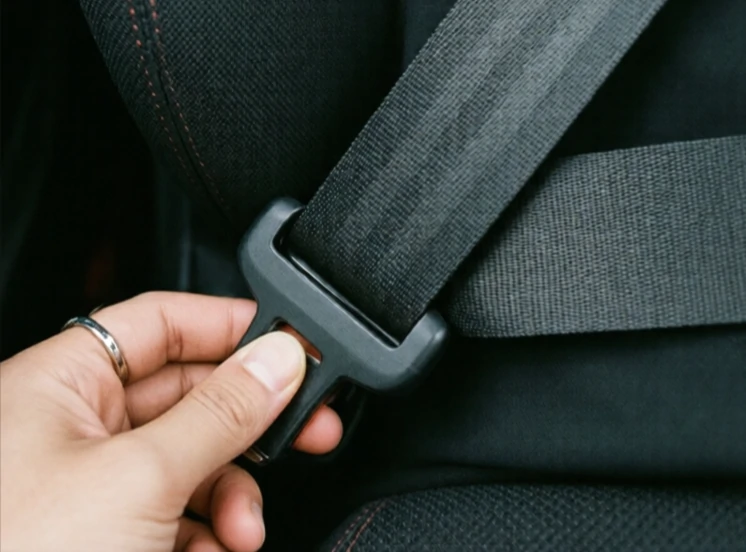
A seat belt holds an occupant in place during a crash. That is the entire purpose. It sounds modest. It is the single most effective safety device ever fitted to a car.
Early lap belts appeared in the 1950s, but they could cause internal injuries in a collision. Nils Bohlin, an engineer at Volvo, designed the three-point belt in 1959 and the company released the patent for free. The three-point design spreads crash forces across the pelvis and chest. It has saved an estimated one million lives worldwide.
How a modern seat belt works
- Retractor reel keeps the belt snug but allows movement.
- Locking mechanism engages during sudden deceleration.
- Pretensioner fires a small charge to remove slack in a crash.
- Load limiter lets the belt stretch slightly to reduce chest force.
Laws requiring seat belt use exist in nearly every country. Enforcement varies. In the United States, belt use sits around 90 percent, and the remaining non-users account for a disproportionate share of traffic deaths. Airbags are designed to work with belts, not replace them. An unbelted occupant can slide under an airbag and strike the dashboard.
Comments
No comments yet. Be the first to share a thought.
Leave a comment