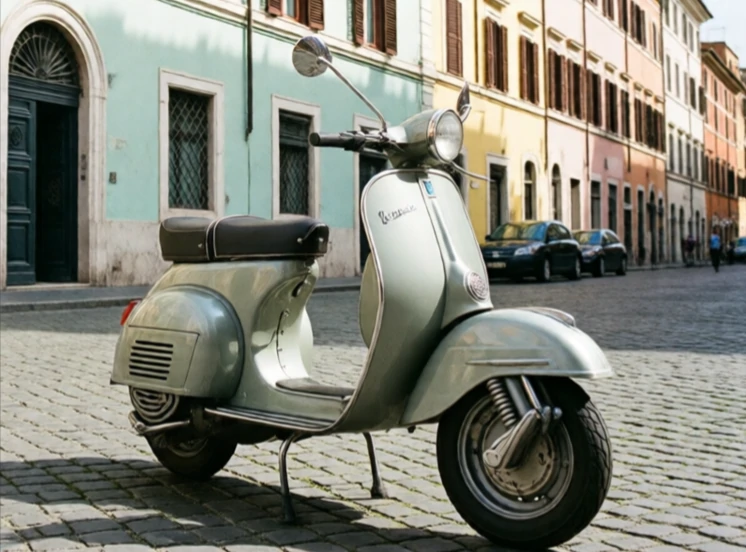
A scooter has a step-through frame, small wheels, and a platform for the rider's feet. No straddling a tank. No swinging a leg over a tall seat. That layout made the scooter the most accessible motorized two-wheeler ever built.
Piaggio's Vespa, introduced in 1946, defined the shape. Its pressed steel body hid the engine and protected the rider from road spray. Honda's Super Cub, starting in 1958, added a semi-automatic clutch and became the best-selling motor vehicle in history. Today scooters range from 50cc city runabouts to 650cc maxi-scooters that tour highways.
Scooter characteristics
- Step-through frame for easy mounting.
- Small wheels, usually 10 to 16 inches.
- Automatic or continuously variable transmission on most models.
- Under-seat storage on many designs.
- Lower center of gravity than a motorcycle.
Scooters dominate daily transport in Rome, Taipei, and Ho Chi Minh City. They are cheap to buy, cheap to run, and easy to park. In cities with heavy traffic, a scooter often beats a car across town. The trade-off is exposure in a crash and limited highway capability on smaller models.
Comments (2)
Leave a comment