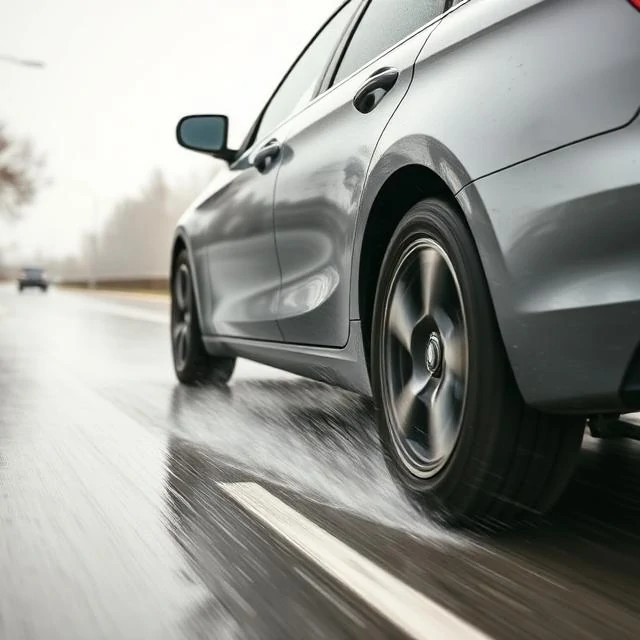
Slam the brakes on a slippery road, and the wheels lock. The car slides, and steering does nothing. Anti-Lock Braking Systems, or ABS, prevent that. They monitor wheel speed and rapidly release and reapply brake pressure to keep the wheels turning. The driver can steer while braking hard, which is often the difference between a crash and a near miss.
The system uses wheel speed sensors at each wheel, a hydraulic control unit, and a computer. When a sensor detects a wheel decelerating too quickly, the computer signals the hydraulic unit to release pressure for a fraction of a second, then reapply it. The cycle repeats up to 15 times per second. The driver feels a pulsing in the brake pedal, which is normal.
ABS was first used on aircraft in the 1920s and on cars in the 1970s. It became standard on most new vehicles by the 2000s. Modern systems add electronic brakeforce distribution, which balances braking between front and rear, and brake assist, which applies full pressure when the driver panics.
ABS does not shorten stopping distances on all surfaces. On loose gravel or deep snow, a locked wheel can dig in and stop faster. But on pavement, especially wet pavement, ABS keeps the car controllable. That control is the point.
Comments
No comments yet. Be the first to share a thought.
Leave a comment