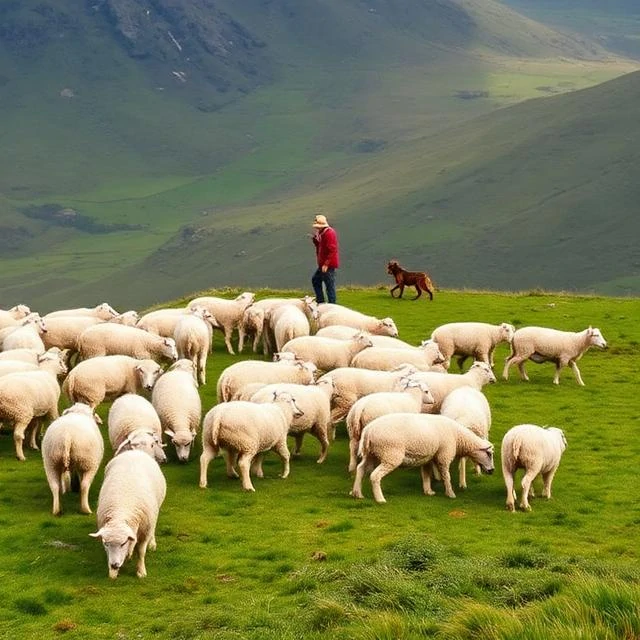
Sheep were among the first animals domesticated, roughly 10,000 years ago in the Fertile Crescent. They were kept for meat, milk, and hides before wool became the dominant product. For centuries, wool was one of the most important commodities in Europe, and sheep shaped landscapes from the English downs to the Spanish meseta.
Today, sheep are raised on every continent except Antarctica. China, Australia, India, and Iran have the largest flocks. Breeds are grouped by purpose: fine wool (Merino), long wool (Romney, Lincoln), meat (Suffolk, Hampshire), and dual-purpose types. Some breeds are kept for milk, especially in the Mediterranean and Middle East.
Why sheep remain useful
- They graze land too rough or poor for cattle
- They produce wool, meat, and milk
- They control weeds and brush in orchards and vineyards
- They fit well in rotational grazing systems
Sheep are also vulnerable. Predators, parasites, and foot rot are constant concerns, and lambing is a demanding period. Flock sizes vary from a handful of animals on a smallholding to tens of thousands on Australian stations.
Comments
No comments yet. Be the first to share a thought.
Leave a comment