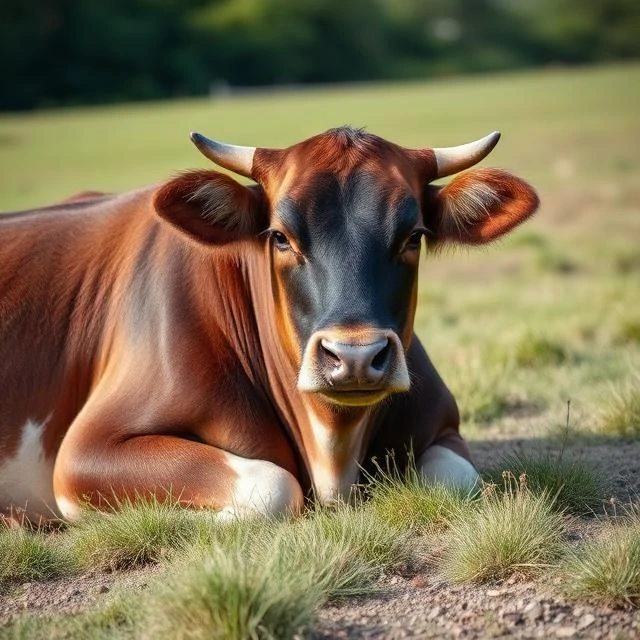
Ruminants are mammals that digest plant material in a multi-chambered stomach. The group includes cattle, sheep, goats, deer, antelope, camels, and giraffes. What sets them apart is the rumen, a large fermentation chamber where microbes break down cellulose that no mammal can digest alone.
The process works in stages. Food is swallowed, fermented in the rumen, regurgitated as cud, chewed again, and swallowed once more. This cycle lets ruminants extract far more energy from grass and hay than a simple-stomached animal could. The trade-off is time: a cow spends six to eight hours a day chewing cud.
Why farmers care
- They convert grass and crop residues into protein
- They can graze land unsuitable for cropping
- They produce methane, a potent greenhouse gas
- Their manure is a valuable soil amendment
Feed quality shapes everything. A diet of lush pasture produces more milk and less methane than a diet of low-quality straw. Researchers are working on feed additives, including seaweed, that reduce methane emissions without hurting production.
Comments
No comments yet. Be the first to share a thought.
Leave a comment