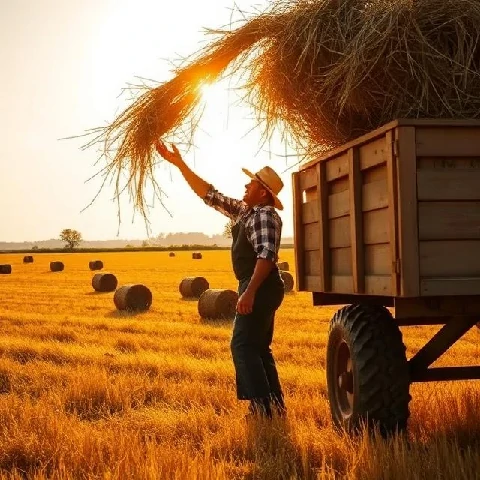
Hay is grass or legumes cut, dried, and stored to feed livestock when pasture is not available. It is one of the oldest conserved feeds in agriculture, and the smell of it in a barn is a fixture of rural life.
Making good hay is a race against weather. Cut too late and the plant has lost protein. Bale too wet and the stack will heat, mould, and sometimes catch fire. Farmers ted the crop to speed drying, rake it into windrows, and bale only when moisture drops below about 18 percent.
Common hay crops
- Alfalfa: high protein, preferred for dairy cattle
- Timothy and orchard grass: reliable in cool climates
- Clover: palatable and nitrogen-fixing
- Ryegrass: fast-growing and widely used in Europe
Round bales left in the field and square bales stacked in a loft are both common. Wrapped bales, called balage, ferment slightly and keep better in wet regions. Either way, hay is the bridge between a lush summer and a lean winter.
Comments
No comments yet. Be the first to share a thought.
Leave a comment