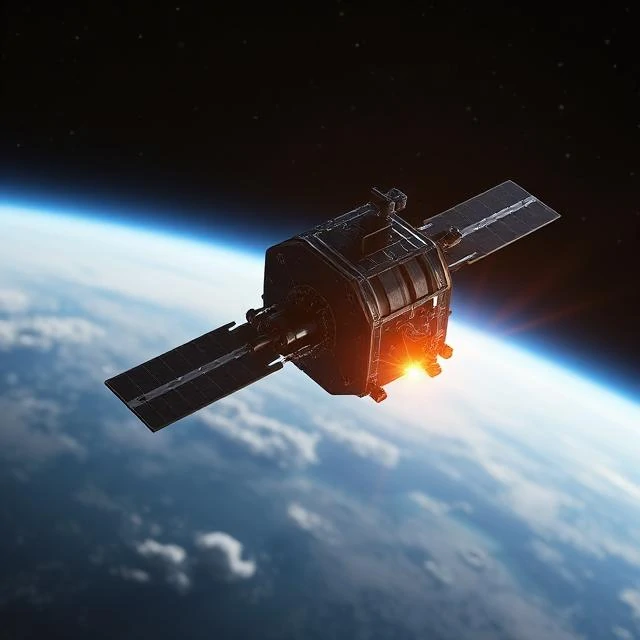
Big engines move rockets off the pad. Small thrusters keep spacecraft pointed and nudge them onto new trajectories. These compact propulsion devices fire brief pulses, often measured in milliseconds, to make precise adjustments.
Most use hypergolic propellants that ignite on contact, which removes the need for an ignition system and makes them reliable after long periods in space. Cold gas thrusters use compressed nitrogen, offering simplicity at the cost of low performance.
Common thruster uses
- Attitude control and pointing
- Orbit adjustments and station keeping
- Desaturation of reaction wheels
- Docking and proximity operations
Propellant is finite. Every thruster firing consumes mass that cannot be replaced. Engineers budget every pulse, and mission planners count the total delta-v available before the spacecraft is launched.
Comments
No comments yet. Be the first to share a thought.
Leave a comment