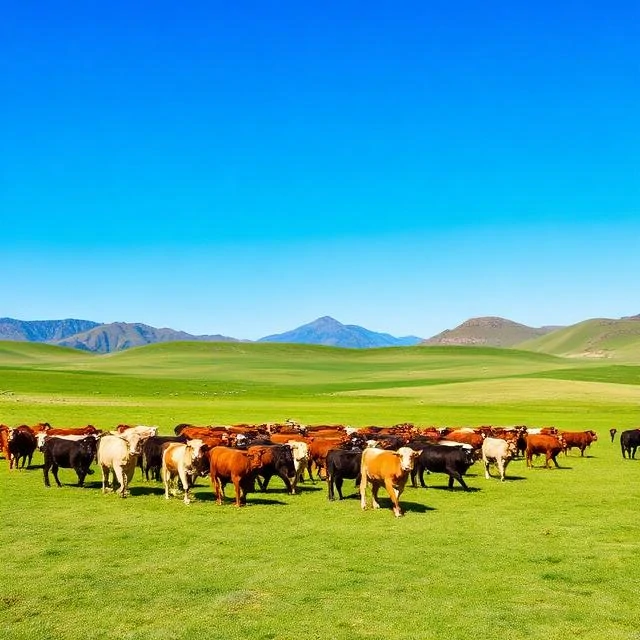
Livestock are domesticated animals raised for food, fibre, work, or other products. The category includes cattle, sheep, goats, pigs, poultry, horses, donkeys, camels, and in some regions rabbits and guinea pigs.
Their role varies enormously by region. In parts of sub-Saharan Africa, cattle serve as wealth, draft power, and bride price as much as meat. In the American Midwest, a thousand head of beef cattle may spend their last months in a feedlot. In the Netherlands, dairy cows produce milk under some of the most intensive management in the world. In Mongolia, herders still move with the seasons.
Why livestock matter
- Convert grass and crop residues into protein people can eat
- Provide manure for soil fertility
- Supply draft power in regions without tractors
- Generate income and store wealth in rural economies
Livestock also carry environmental costs. Ruminants produce methane, and intensive systems require feed, water, and land. The policy debate over how much meat the world can sustainably produce is not settled and will not be settled soon.
Comments
No comments yet. Be the first to share a thought.
Leave a comment