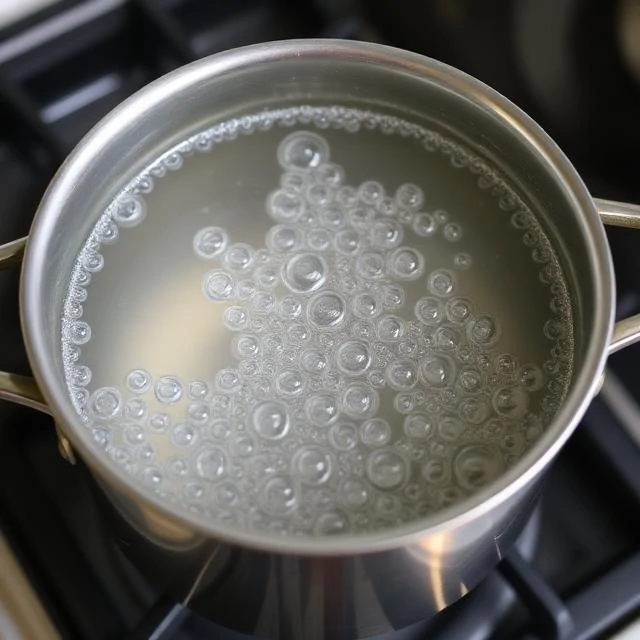
Boiling heats a liquid until it bubbles and cooks the food. The liquid reaches 100 degrees Celsius at sea level. The bubbles rise from the bottom of the pot and break on the surface. The food is submerged and cooked by the hot liquid. Pasta, rice, eggs, and vegetables are commonly boiled. The method is simple. The timing is the skill. Boiling is not always a rolling boil. A gentle simmer is often better. A rolling boil can break delicate food. A simmer cooks it evenly.
Boiling has several uses. It cooks starchy foods like pasta and potatoes. It sets the texture of vegetables, though blanching is a gentler approach. It hardens eggs and softens beans. It sterilizes water. It reduces liquids in a sauce. It extracts flavor from bones and vegetables in a stock. Each application has its own temperature and time. The pot and the stove are the tools. The cook is the observer. The bubbles are the signal.
Boiling is affected by altitude. At high altitude, the boiling point drops. Water boils at a lower temperature, so food takes longer to cook. That is why high-altitude recipes adjust the time and the liquid. Salt raises the boiling point slightly, but not enough to matter for most cooking. The real reason to salt the water is flavor. The salt seasons the food as it cooks. Boiling is a simple method. It is also a fundamental one. It is the first cooking technique many people learn. It is the one they use most often. It is the one that never fails.
Comments
No comments yet. Be the first to share a thought.
Leave a comment