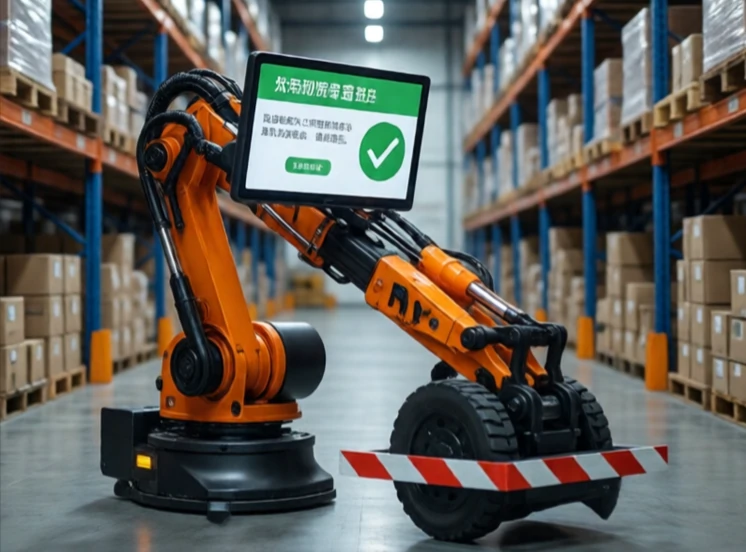
A semi-autonomous robot handles some tasks on its own but relies on a human for others. It is a middle ground between teleoperation and full autonomy. The robot might drive itself down a highway but ask the human to take over in city traffic. It might pick objects from a bin but ask for help when it encounters something unfamiliar.
The term is common in self-driving cars. Levels 2 and 3 on the SAE autonomy scale are semi-autonomous. The car can steer, accelerate, and brake, but the human must monitor and be ready to intervene. Levels 4 and 5 are fully autonomous. Most consumer vehicles today are Level 2. The jump to Level 3 is hard because the human must stay engaged even when the car is driving.
Semi-autonomous examples
- Adaptive cruise control with lane centering.
- Warehouse robots that navigate but call for help when blocked.
- Surgical robots that steady the surgeon's hand.
- Drones that fly a path but require a human to land.
- Agricultural robots that harvest but need a human to refill.
The challenge is the handoff. When the robot asks for help, the human must understand the situation quickly and take control smoothly. If the handoff is clumsy, accidents happen. That is why semi-autonomous systems need clear interfaces, advance warning, and fallback behavior. The robot should know what it does not know. It should ask for help before it gets stuck, not after. Semi-autonomy is not a temporary state on the way to full autonomy. For many applications, it is the right balance. A human provides judgment and adaptability. The robot provides precision and endurance.
Comments
No comments yet. Be the first to share a thought.
Leave a comment