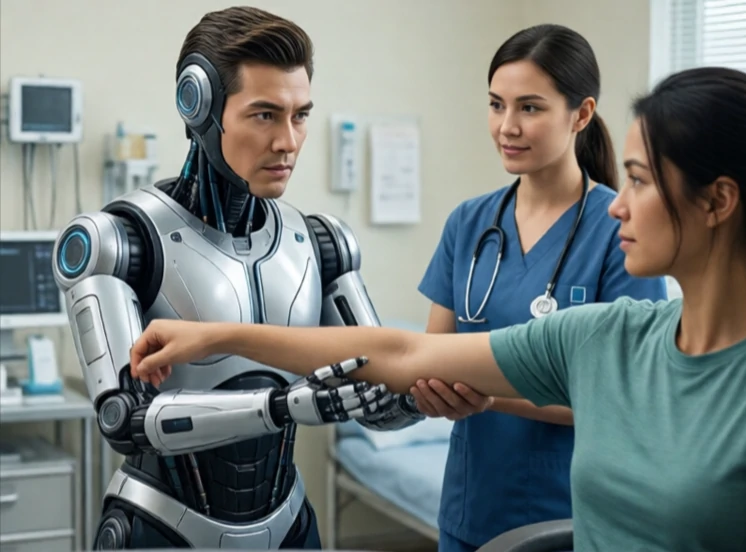
A medical robot assists healthcare workers with surgery, rehabilitation, diagnosis, or patient care. The da Vinci Surgical System is the best-known example. A surgeon sits at a console and controls robotic arms that hold tiny instruments inside the patient. The robot translates the surgeon's hand movements into precise, scaled-down motions.
Medical robots are not autonomous. They extend human skill. A surgical robot filters out hand tremor and allows movements smaller than a millimeter. A rehabilitation robot guides a stroke patient's arm through repetitive exercises. A hospital delivery robot carries medications and lab samples through corridors. A disinfection robot uses UV light to kill pathogens in operating rooms.
Categories of medical robots
- Surgical: da Vinci, Mako, Rosa.
- Rehabilitation: exoskeletons, gait trainers.
- Assistive: wheelchair-mounted arms, feeding robots.
- Service: delivery, disinfection, telepresence.
- Diagnostic: capsule endoscopy, robotic ultrasound.
The regulation is strict. The FDA classifies medical robots as devices and requires clinical trials for high-risk applications. Costs are high. A da Vinci system costs over a million dollars, plus instruments and maintenance. That limits adoption to large hospitals. Smaller, cheaper systems are entering the market for specific procedures. The promise is better outcomes, smaller incisions, faster recovery, and less strain on clinicians. The reality is that medical robots are tools, not replacements. They do what the surgeon or therapist cannot do alone: be perfectly steady, perfectly repeatable, and perfectly precise.
Comments (3)
Leave a comment