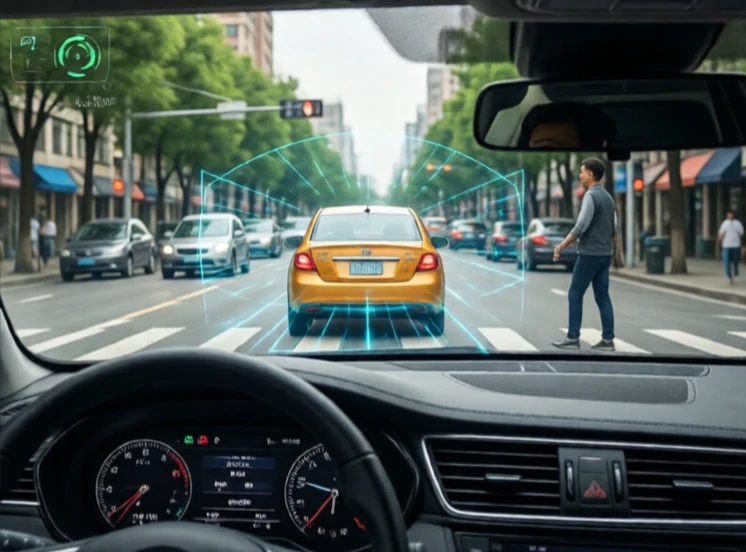
Collision avoidance keeps robots from hitting things. It combines sensing, prediction, and path planning. The robot must detect obstacles, figure out where they are going, and adjust its own path to stay clear.
The simplest systems use bumpers or proximity sensors that stop the robot when something gets too close. More advanced systems use lidar, cameras, and radar to build a map of the environment and track moving objects. Autonomous cars are the highest-profile example, but collision avoidance also matters for warehouse robots, drones, and industrial arms sharing space with people.
Collision avoidance techniques
- Reactive stopping: stop when an obstacle is detected.
- Path re-planning: calculate a new route around the obstacle.
- Velocity obstacles: adjust speed and direction to avoid future collisions.
- Potential fields: treat obstacles as repulsive forces.
- Learning-based: train on simulated collisions to predict and avoid.
The hard part is dynamic environments. A stationary obstacle is easy. A person walking unpredictably is not. A forklift moving at speed is harder still. Robots must balance safety with efficiency. Stopping every time a leaf blows across a sensor is safe but useless. The best systems classify obstacles by threat level and respond proportionally. They also fail safely. If the sensor dies, the robot stops rather than guessing. Collision avoidance is not just about avoiding crashes. It is about earning trust.
Comments
No comments yet. Be the first to share a thought.
Leave a comment