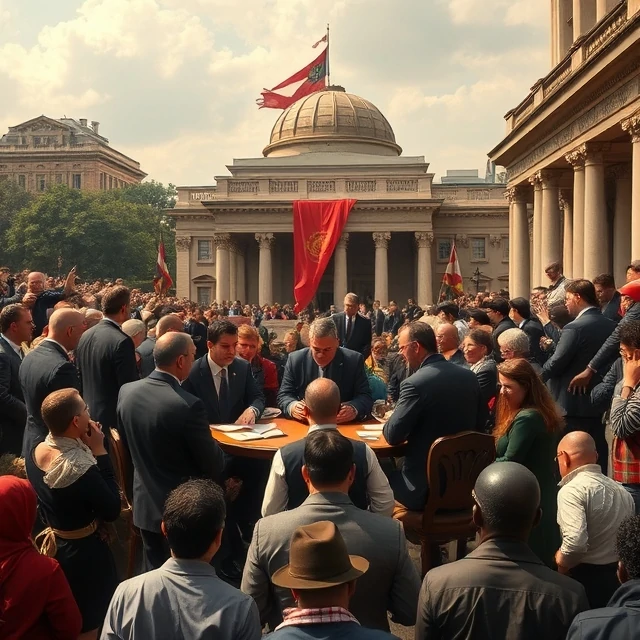
When a small elite holds effective political power, the system is an oligarchy. Membership in the elite may rest on wealth, military control, party position, or family connection.
Oligarchies limit meaningful participation by the broader population. Formal democratic institutions may exist but are subordinated to elite coordination. Policy tends to protect the interests of the ruling group. Transitions out of oligarchy are difficult because the elite controls the resources and institutions that would be needed to challenge it.
Classical political thought treated oligarchy as a distinct regime type alongside monarchy and democracy. Modern usage often describes hybrid regimes in which elections occur but outcomes are constrained by concentrated economic or coercive power. Reducing oligarchic control typically requires both political reform and changes in the underlying distribution of wealth or force.
An oligarchy can maintain a democratic façade while ensuring that real decisions remain in few hands.
Comments
No comments yet. Be the first to share a thought.
Leave a comment