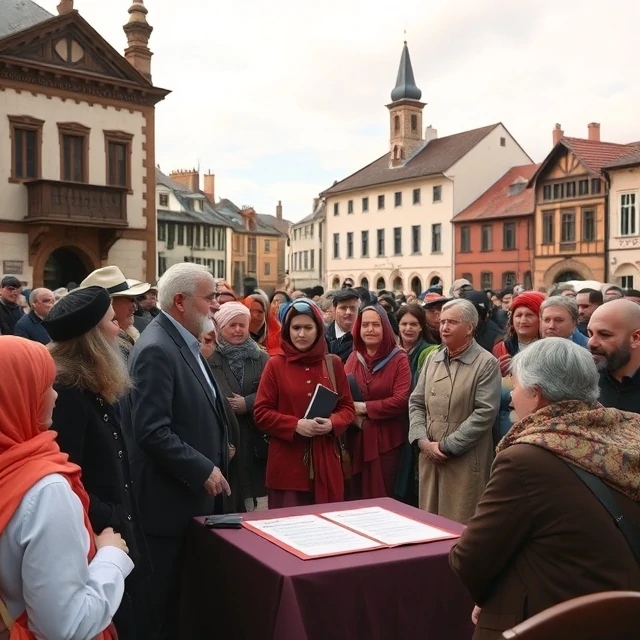
Social contract theory holds that political authority rests on an agreement among the governed. People give up some freedoms in exchange for protection and order. The idea goes back to ancient Greece, but it became central to modern political philosophy through Hobbes, Locke, and Rousseau. Hobbes argued that without government, life is nasty, brutish, and short. To escape the state of nature, people agree to submit to a sovereign. Locke argued that the state of nature is not a war of all against all, but it lacks a neutral judge. People agree to form a government to protect their rights. If the government fails, they have a right to revolution. Rousseau argued that the social contract is not a submission to a sovereign but an expression of the general will, the collective will of the people.
Social contract theory has been criticized. Some argue that the contract is a fiction, that no one ever actually agreed to it. Others argue that it ignores power imbalances. Defenders reply that the contract is a thought experiment, a way of asking what principles of justice rational people would choose. Rawls used the social contract in this way, arguing that principles of justice should be chosen behind a veil of ignorance. The social contract remains a powerful framework for thinking about political obligation, rights, and justice.
Key social contract thinkers
- Hobbes. Absolute sovereignty to escape the state of nature.
- Locke. Government to protect natural rights, with a right to revolution.
- Rousseau. The general will and popular sovereignty.
- Rawls. Justice as fairness, chosen behind a veil of ignorance.
The social contract is not a historical event. It is a way of justifying political authority by asking what people would agree to.
Comments
No comments yet. Be the first to share a thought.
Leave a comment