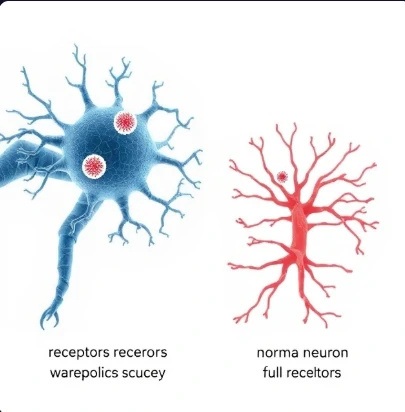
Tolerance is the diminishing effect of a drug after repeated administration of the same dose. A person who once felt strong effects from a small amount of alcohol or opioid eventually requires larger amounts to achieve the same intensity. The body has adapted.
Several mechanisms contribute. Metabolic tolerance occurs when the liver becomes more efficient at breaking down the drug. Cellular or pharmacodynamic tolerance involves changes at the level of receptors and intracellular signaling. Behavioral tolerance can develop when the person learns to compensate for the drug’s effects in familiar settings.
Tolerance is closely related to physical dependence. When the drug is removed, the adapted system is left without its accustomed input and withdrawal symptoms appear. Not every drug produces significant tolerance, and the rate at which tolerance develops varies widely across substances and individuals.
- Reduced response to a given dose
- Metabolic and cellular mechanisms
- Often accompanies physical dependence
- Varies by drug and person
Understanding tolerance is essential for safe dosing and for explaining the escalating consumption patterns seen in many substance-use disorders.
Comments
No comments yet. Be the first to share a thought.
Leave a comment