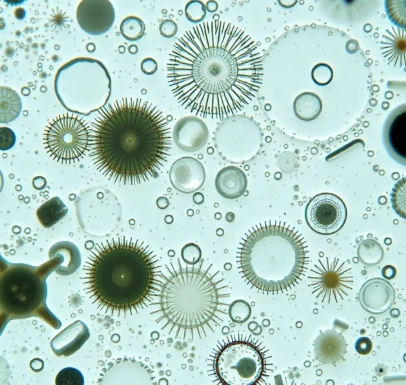
The invisible pasture of the ocean consists of microscopic photosynthetic organisms known as phytoplankton. They include diatoms, dinoflagellates, coccolithophores, cyanobacteria, and many other groups. Despite their small size, they perform roughly half of the planet’s primary production.
Phytoplankton form the base of most marine food webs. Their abundance is controlled by light, nutrients, temperature, and grazing by zooplankton. Blooms can color the water and are readily detected by satellite sensors measuring ocean color. When phytoplankton die or are eaten, a fraction of their carbon sinks into the deep ocean, contributing to the biological carbon pump.
Changes in phytoplankton community composition or productivity cascade through fisheries and biogeochemical cycles. Warming, altered stratification, and changing nutrient supply are already shifting phytoplankton distributions in many regions. Monitoring phytoplankton is therefore central to both ecosystem management and climate science.
- Microscopic marine photosynthetic organisms
- Base of most ocean food webs
- Responsible for about half of global primary production
- Monitored by satellites and in-situ sampling
Comments
No comments yet. Be the first to share a thought.
Leave a comment