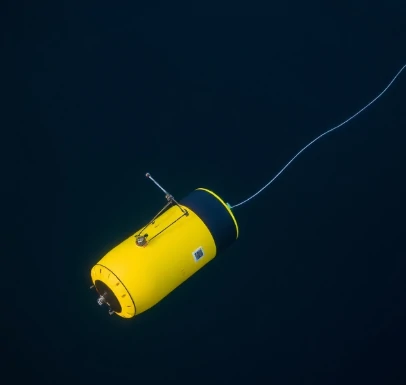
A cylindrical robot the size of a person drops from a ship into the open ocean and disappears. Over the next decade, it will spend almost all of its life in darkness, drifting a kilometre below the surface, then sinking to two kilometres, then climbing back up while measuring the water. It surfaces for less than a day to phone home by satellite. Then it does it again. And again, roughly 150 times.
That routine is the core of the Argo program, an international fleet of nearly 4,000 floats that has transformed how oceanographers see the upper ocean . Each float carries sensors for temperature, salinity, and pressure. Salinity comes from conductivity measurements, since saltier water conducts electricity differently than fresh water. The data stream back in near real time, free for anyone to download.
What makes the system work
- Neutral buoyancy at depth. Floats are ballasted to drift at roughly 1,000 metres without sinking or rising, which saves battery and lets them travel with currents for years .
- A simple pump. An internal bladder moves oil in and out. Inflating the external bladder makes the float rise; deflating it lets the float sink .
- A 10-day cycle. Park, drift, descend to 2,000 metres, ascend while profiling, surface, transmit, repeat .
The payoff is enormous coverage. Argo floats have collected more than three million profiles, four times the amount of ocean information gathered by ships and moored buoys combined . That record underpins weather forecasts, climate assessments, and the detection of long-term ocean warming.
Comments
No comments yet. Be the first to share a thought.
Leave a comment